BWFLI
  • Facebook
  • Home
  • Blogs
    • Brenda’s Blog
      • Brenda’s Blog
      • About Brenda A. Smith
    • Weekly Thoughts
    • Breakfast With Fred
      • What is Breakfast With Fred?
      • About Fred Smith, Sr.
      • Breakfast With Fred website
  • BWFLI Roundtable
    • BWFLI Launches the Roundtable
    • Introduction-Schedule-Bios
    • Ron Glosser-Fred Smith chapter
    • Perseverance Book
    • 200 Mentoring Questions
    • Jarvis College BWFLI poster
    • Alice Lloyd College poster
    • Lindsey Wilson College poster
  • Leadership Online
    • Leadership Team
  • About Us
    • What is BWFLI?
    • What is Breakfast With Fred?
    • About Fred Smith, Sr.
    • About Brenda A. Smith
    • Contact Us
  • Please Donate
    • Click Here to Donate
    • Why Give to BWF Project, Inc.?
  • Home
  • 2015 (Page 4)

The Three Aspects of Action

Weekly Thought – August 11, 2015

Fred enjoyed reading military history. The strategies of great generals intrigued him, as did their motivations. One of his favorite stories was the one of Robert E. Lee’s young officer who ended each letter with YTCO: Yours to Count On. During a long hospital stay, one of his granddaughters sent him a simple piece of paper with those letters. They hung on his wall until his discharge.

Planning for the 2016 and 2017 BWFLI schedules is moving ahead. Teams of men and women who are committed to “stretching and blessing the next generation of leaders… to the glory of God” are forming.

The Three Aspects of Action

We must consider three aspects as we think about action: 1) concept 2) system, and 3) philosophy. The concept defines the basic principles. The system is the implementation method for these principles. And, the philosophy is the reason for doing it.

Let’s say it another way: The concept is the what to do; the system is the how to do it; and the philosophy is the why of doing it.

Once the concept is clearly understood the system becomes a matter of technological development and procedure. However, until the concept is crystallized, it is counter-productive to move ahead. One of the great aspects of leadership is setting the vision and then drawing everyone together under the banner.

A major downfall is attempting to repeat systems without thoroughly analyzing the situation. I always like to say, “keep current.” This means knowing all the details which will influence the impact of an action. Concepts can be transferable more easily than systems and implementation. There are very few situations which totally parallel each other and respond to the exact same systems. The great leaders know how to identify the differences and adjust accordingly.

An example of this is my experience with the great National Steel Strikes in the 1950s. I was called in to develop strategies for management. They pulled out ideas that had worked in the past and since their goal of coming to a positive outcome was the same, they assumed they could use the same system or technique. Again, updating your facts before taking action is critically important.

Action also requires art and science. Some aspects can be formularized, but others must be developed through experience. Asking the right questions, listening carefully, and watching body language enable one to read situations. In Texas they laugh about people who go “ready, fire, aim.” Jumping the gun in taking action can be deadly – and often very costly.

Knowing what to do, how to do it, and why to do it allows a leader (and the organization) to clearly develop a workable process which leads to success. Repeating past successes without current updating, or heading off without a proper vision can only lead to disappointment.

This week carefully consider: 1) Which aspect of action is my soft spot? 2) Where have I matured the most? 3) How can I use Fred’s thoughts to develop others?

Words of Wisdom: “The concept is the what to do; the system is the how to do it; and the philosophy is the why of doing it.”

Wisdom from the Word: “How blessed are those whose actions are blameless, who obey the law of the Lord.” (Psalm 119:1 NET Bible)

Read More

Things Are Important

Weekly Thought – August 4, 2015

Fred took Oswald Chambers’ admonition to “sit loose to things” quite literally. He never allowed possessions to hold him hostage. There were few things that needed replacing if enough duct tape were properly applied.

Thank you for your consistent encouragement and support. Your words of gratitude help us in our work. Your illustrations of how Fred’s thoughts strengthened you gratify us and undergird the BWF Project.

Things Are Important

Practical excellence starts with our relationship to things. Most of our time, energy, and thought are involved with the material. So, we must ask ourselves: “Are our possessions hurting or helping us?”

Accumulation has a philosophy. Social historians look closely at a culture in relation to its artifacts. Understanding their material remnants tells a vivid story about the people and the way they lived. When there was written history, it is often eclipsed by the study of what the people accumulated. It is like the difference between saying and doing.

I often laughingly consider what archaeologists will piece together about us when they find piles of non-biodegradable butter tubs!

Ads tell us we can have it all! Sadly, too many buy into the idea that lacking the latest and greatest gadget labels one as a failure. I once read a sign saying, “If you can’t count it, it don’t count.” Foolishness. I tend to believe the more things I own, the more they own me. Ask my family about my different hobby phases and they will quickly tell stories of boating gone awry or temporary woodworking projects which turned into oddly permanent fixes.

Buying the good life is another mistaken idea about things. I have been poor and I have been not poor, and certainly not poor gives me more options. But it didn’t create a substantial life – character choices does that. I have seen way too many who thought the good life consisted of stuff, but they ended up mediocre, spoiled, rich brats. Growing up I saw men and women in the mill district of North Nashville who had very few things, but knew what good in life meant.

A word about money in the Christian world. It can gain someone recognition quickly. Big givers climb the pyramid of fame with jet speed. Ironically, some of those with reputations for giving hold tightly to their assets but promise them for future gifts. A very wise man once said, “There is no better job than being a big potential donor.”

Christians must hold the proper view of things. Scripture tells us much that is valued in this world will be burned up as “wood, hay, and stubble.” We cannot neglect the importance of things, but we must never put our trust in them. And of course, we must always “sit loose to things” as Oswald Chambers says, for they are never ours to keep, but just to manage.

This week think about: 1) How tied am I to my things? 2) What things in my life define me? 3) When archaeologists dig up my “things,” what story will they tell?

Words of Wisdom: “Growing up I saw men and women in the mill district of North Nashville who had very few things, but knew what good in life meant.”

Wisdom from the Word: “For what benefit is it for a person to gain the whole world, yet forfeit his life?” (Mark 8:36 NET Bible)

Read More

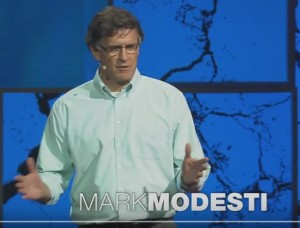
Mark Modesti TED Talk – The Argument for Trouble

Mark Modesti TED The argument for Trouble 10-29-15BWFLI Board member, Mark Modesti present a engaging TED Talk in Sept 2015. Click here to view Mark Modesti’s TED Talk.

Read More

ID Required

blog-48-texas-driver-license

Brenda’s Blog – July 28, 2015

“All we need is your driver’s license…”

I lost my driver’s license, along with all my other ID cards. Think how socially lost you are without proof. You truly don’t exist. The catch-22 of invisibility is almost impossible to navigate. Social security wouldn’t let me apply for a replacement without a driver’s license. But a driver’s license was inaccessible without a social security card. I was a non-person!

Existential philosophers challenge us to consider the meaning of life, especially and particularly our own lives. Why are we alive and who are we – really? A question of identity.

Identity is a big topic right now. Identity theft, identity fraud, identity exchange, identity confusion – who we are is very much in play. More importantly, who we are NOT is a critical point.

And how we determine and maintain our identity is a crucial process.

The messages we send to the outside world matter. But the messages I send to my inside world matter even more. As a believer in Christ Jesus, I find great peace in the knowledge that my true identity is not what others think I am, or even what I think I am – it is who God through Christ has made me to be.

When I attempt to rearrange, reinvent, or regenerate an identity based on what I think will accomplish my goals, and satisfy my longings, crisis occurs.

Foundational to my identity is the sovereignty of God. I am not a free agent, managing my world with an unfettered hand. I am the beloved creation of a purposeful, intentional God who designed me, my path, and my destiny. Self-identification is a distorted, often perverted version of what our God determined. And when an imperfect being attempts to outthink the Perfect, chaos ensues.

Throughout the chafing, aggravating, irritating (and many other “ing” emotions) experience, I had to stop and think about who I truly am. I am not who the government recognizes me to be. I am not even who the culture decides I will be. NO, I am the daughter of the King, redeemed by the blood of the Lord Jesus Christ. In Him, I am free to be me. The child’s book had it partially right, but missed the crux of the issue. It is IN HIM I find the freedom to identity. I don’t have to defiantly self-identify because He has already claimed me as His own.

Yes, I finally am a licensed driver in the state of Texas, and qualified for social security benefits. But thanks be to God I am His and He is mine, whether or not I am credentialized. My identity rests in the finished, acceptable work of Jesus.

Read More

The Stress of Singleness

Weekly Thought – July 28, 2015

Fred spoke to singles’ retreats and sometimes received unusual requests. After one presentation a woman came up and waited patiently while others spoke to him. Finally, her turn came and she simply said, “I need you to find me a husband.” “Pardon, me, ma’am, but we have never met so why do you think I am to do this?” “I was told older men have the responsibility to find proper men for single women… and you are old.” He graciously declined. His practical wisdom helped many singles throughout the country. This 2002 article gives an insight into his thinking.

The Stress of Singleness

Mary Alice and I will be married 66 years June 25, 2003. We haven’t been single for a long time, but I have been asked a lot throughout my life to speak to singles groups. Here are a few of the common stressors.

1) Time pressures – too many confuse the fast track and the frantic track. But what a significant difference there is! I believe in the energy and excitement of the former, but distrust and deny the latter. Unfortunately, some singles equate inactivity with loss of inclusion. They say “yes” to every invitation seeking belongingness. And, singles just pushed by time when others assume they are available “because they don’t have families at home.”

2) Peer pressures – the stress of adolescent peer pressure should lessen as we age, but I see too many who still fall into the trap of giving too much control away. When they let others set their direction, goals, and definition of accomplishment, they open the door to unhealthy stresses. There are no age limits (or even marital status) which keep us from looking to others for approval, but I see many singles who put too much emphasis on the acceptance of friends and colleagues. Because of this stress, it is critical to carefully analyze and appraise those who are influencers.

3)Money – I notice when I talk with singles groups I find a particular weakness for advertising claims…and it eats them up. Madison Avenue invests big bucks to reach this particular demographic. Sporting activities are a prime example. Have you ever considered how much it costs to “look like a golfer? Tennis player? Bike rider?” No one just takes up a hobby without all the proper accoutrements. Living the lifestyle often squeezes singles into a tough spot which creates debt and stress. A plan and financial strategy are necessary elements in anyone’s life, but particularly for those who are targeted for impulse and emotional buying.

4) Relationships – Developing healthy relationships can be difficult. Many times when I speak to groups I find informal discussions coming around to the loneliness of singleness. Finding people to trust isn’t easy. Growing in a spiritual relationship doesn’t come more readily just because there is no spouse and children to consider. Being single doesn’t automatically create spiritual depth. The stress of being Mother Teresa or Apostle Paul can lay heavy on single shoulders.

God calls each of us to our own walk. Whether married or single, our focus is to be on Him and in Him. He is the answer to the stresses. He gives the peace. He moves us toward maturity.

This week think carefully about: 1) How can I serve those who are single? 2) What does singleness mean in the Christian community? 3) Who is struggling with loneliness as well as aloneness?

Words of Wisdom: “Money is a tool, not an idol. It gives option. It is a stewardship.”

Wisdom from the Word: “Anxiety in a person’s heart weighs him down, but an encouraging word brings him joy.” (Proverbs 12:25 NET Bible)

Read More

Dialysis University

Weekly Thought – July 21, 2015

Fred began dialysis July 1999. As part of his processing he wrote a piece which he called Dialysis University knowing much learning was ahead. In an unusually long weekly thought, the entire article is reproduced for you. In the intervening years many ask for these thoughts applying them to any permanent life changing event. May it bless you this week and beyond.

Dialysis University

My life has permanently changed. I accept the change; now I must try to understand it. In order to get the most from the change I must consider myself, at 84, to have enrolled in a new school which I call DU (Dialysis University) with classes three days a week for four hours each.

There are certain unique features to DU. The teachers share the responsibility with me. They keep me alive with their medical skill and I decide what courses of learning to follow from a great variety of possibilities, the first being a comprehensive understanding of the full dialysis process. They provide the quality time and I decide what I will do with the time. It is a joint responsibility.

Another unique feature of DU is the lack of a graduation; therefore, a diploma doesn’t determine the course selection. Exit from the school is entrance into eternity.

In order to maximize the experience I have decided to adopt a philosophy of dialysis that will guide me as I progress. I have put it into writing so that I might read and review until it becomes a mental/spiritual habit and eventually a living reflex.

Constructive Adjustments To Dialysis:

1. Gratitude for the discipline: Don’t rebel against the restrictions. I am being helped rather than restricted. This discipline assures life.

2. Respect the diet: It is not what I can’t have; it’s that I don’t want what I should not have. Abstinence is positive, not negative.

3. The expenses: I’m making an investment in a quality of life, not being forced to spend money on assistance that I once didn’t require.

4. Recognize the variable value of time: Spend the most valuable hours on the most valuable activities. Have interesting, productive things to do during the hours of energy. Don’t fret about the survival mode in down times. I am only responsible for what I can do, not for what I would like to do or think that I should do. Only my capability is my responsibility.

5. Guard against negative thoughts and remarks: Guard against them either within myself or with others. I am not competing in a health race with others. Accept that sickness can be destructive to a proper attitude. Disciplined silence can be constructive.

6. Not part of divine punishment: I consider my sickness as normal, therefore in no part divine punishment. Nothing is happening to me “that is not common to man.”

7. Be careful not to lose the good of this difficult situation: Look for each bit of good and express appreciation for it. I believe that God is in my circumstances mysteriously, even though I can’t understand or definitely define each element. Faith, therefore, is a major factor in my adjustment.

8. The situation is for life: Therefore I must take the long view and not be occupied or anxious about every up and down blip on the screen. Up times will be limited just the same as the down times. It is good to remember, “This, too, shall pass.”

9. Dialysis will not define my life: Dialysis may alter my way of life but will not define it. I am not living to have dialysis; I am having dialysis in order to live. Therefore it will not dominate my thoughts nor conversation. It is a means to provide quality life.

10. Control: I will not use my dialysis to control my family or friends.

11. Experience the joy of life: In early dialysis I’ve had some experiences of the joy of life that helped me to understand Paul’s acceptance of his “thorn” or Solzhenitsyn’s gratitude for “the stinking straw.” Suffering’s chief function is to purify – purify our thinking and promote the growth of our faith.

Hail to Old DU!

My choice: Be a victim or a victor.

This week think about: 1) Which point hits home right now? 2) Who needs to read this? 3) How can I best apply Fred’s thinking to my life?

Words of Wisdom: “My life has permanently changed.”

Wisdom from the Word: “I am able to do all things through the one who strengthens me.” (Philippians 4:13 NET Bible)

Read More

Diagnosis and Prescription

Weekly Thought – July 14, 2015

Fred was an excellent marketer. He always checked to see what would be helpful. He wanted to meet needs. When thinking about character he prefaced his thoughts with these words: “I checked around a little bit and found people are interested in this subject, so I decided to make a few notes about ideas utilized over the years for building an organization.”

We are thankful for the ongoing interest in the Breakfast With Fred Leadership Institute. Our 2017 schedule is starting to fill up – very grateful.

Diagnosis and Prescription

Jim Cain, the eminent Mayo Clinic physician, once told me the greatest diagnosticians are the ones who know the most symptoms. I think this carries over into character evaluation, as well. The more we know of strengths, weaknesses, especially in values structures the more we are able to test the waters. And the more likely we will have an accurate reading.
Many question the morality of testing, whether formal or informal. I believe they are neutral. We have to discipline our motives when using them. They are simply attempts to come to an honest evaluation.

Let me share three areas I test for. I will give you more later, and a list of red flags to notice.

1) Self-interest. I probe to ascertain the depth, intensity, and preoccupation with a person’s self-interest. You have to create a question or environment which takes them off guard to test for this. For example, a friend called me asking how my thinking on how he could handle a particular stock deal. He had a great deal of profit in it. I suggested he gift it. I got the long, long pause because he had never made a gift of this size before. I wasn’t judging him – just testing to see his reaction to the idea of gifting. I was looking to see how he saw things. I wanted to see the value he put on things and the priority he gives them.

2) Self-righteousness. I look for the degree of self-righteousness. It generally shows up in the reaction to humor or dramatics. A young man came to see me, telling me about his sermons on Martin Luther. He waxed eloquently on how he wish he could have been there with Luther so he could have stood and cheered. I looked at him and thought of the incongruity of this man who stood in a North Dallas pulpit in a three piece suit versus the slings and arrows of accusation thrown at Martin Luther.

3) Stress. We generally show our true nature when under stress. Who we are and what we do are usually consistent with our fundamental selves. When problems come some people will consistently run, duck, or pass on responsibility. For example, a woman told me of worked for a man who refused to hear anything negative because it upset him. He wanted to take the bows, but not the hard licks. On the other hand, I have known many executives whose gold was refined in the fire. When the filters are removed, we are who we are!

This week think about: 1) How do I evaluate possible hires? 2) How important is character in my assessment of a fit? 3) How well do I do on these three tests?

Words of Wisdom: “When the filters are removed, we are who we are!”

Wisdom from the Word: “For God did not give us a Spirit of fear but of power and love and self-control.” (2 Timothy 1:7 NET Bible)

Read More

The One Thing

blog-47-one-finger

Brenda’s Blog – July 14, 2015

“I am one and only one…”

My grandmother was the wife of a Southern Baptist pastor, the mother of five boys, and a great influence on generations in the Smith line. She repeated her life motto to me regularly on our visits:

“I am one and only one, I cannot do everything, but I can do something. What I can do, I ought to do; what I ought to do, by the Grace of God, I will do.” I wrote it out in calligraphy for her to hang in her apartment. After her death, I received it and now it hangs in my house as a reminder of her strength.

Jack Palance as the character “Curly” in the movie City Slickers sagely counseled Billy Crystal’s character and the others to “find the one thing that is most important in life.” He held up a finger, wordlessly emphasizing the one thing.

We are limited. The era of “having it all” is passe. Even neurological science is supporting the one thing by introducing research which shows our brains were not meant for hyperwarp multi-tasking. We have a unilateral configuration which works most effectively when following one task to completion. Sadly, our social patterns long ago trained us to do many things at one time. We reward those who drive themselves into a frenzy being productive. But perhaps this wasn’t God’s design for us.

What is most important to you? What is your one thing? What gets number one priority when allocating resources of time and energy?

I never did ask my grandmother what her “something” was, but I imagine she would have told me bringing up five boys to revere God, understand their responsibilities, and be grateful for their gifts.

Think about the times when you feel God’s pleasure. Think about the times when your return on effort is multiplied. Think about the times when you felt the joy of being used by God. Could these be indications of your one thing?

Of course, we are called on to operate in a world which demands much from us. But as far as it is possible, let’s join in the covenant to identify our one thing and by the grace of God, do it.

Read More

Student Impact at Emmaus Bible College


Student Impact at Emmaus Bible College of BWFLI events.

Read More

Seeing Clearly

blog-46-portrait-painting

Brenda’s Blog – July 7, 2015

“I know them well and love them much.”

My friend Jean is an artist who works masterfully in oils. As friends walked through her one woman show, we commented on the sensitivity in the faces of her subjects.

“Did you take pictures of them before painting?” She paused for just a brief moment then answered me: “No, but I know them well and love them much.”

Striking and meaningful words.

Most of my friends are now the oldest in their line because their parents and even siblings have moved from earth to heaven. “Their faces are fading,” I heard a woman say. That is true of school friends, neighbors in years past, or work associates. But never for my Mom and Dad. Why? Well, for one thing I have photos, but more than that – I have them engraved upon my heart. And as Jean beautifully said, “I knew them well and loved them much.”

We can extend this beyond faces. I think we can certainly apply this to goals, and aspirations. What happens to those childhood “when I grow up” dreams? Where do those five year goals get warehoused? Could Bucket Lists for those of us over 70 become the regeneration of young hopes?

In looking back I see threads of aspiration which weave throughout my entire life. Then, I see ragged strings which ended up as straggly leftovers. Thankfully, some of those truncated cords didn’t make it through. How wise is our God!

What do you see so very clearly in your life because there is knowledge and love? Where is your focus and your attention? The areas we feed are the ones that grow.

Close your eyes and bring up an image of who you are now and who you want to be in 12 months. Then think carefully about how to know, love, and nurture enough. And, of course, always overlay these hopes with the simple words: “As the Lord wills.”

Read More
«‹23456›»

  • Brenda A. Smith shares a TV Interview about LeTourneau-BWFLI event

  • Fred Smith Sr. shares a lifetime of Encouragement at Centennial Celebration

  • Mark Modesti TED Talk – The Argument for Trouble

  • Student Impact at Emmaus Bible College

  • BWFLI Impacts Lindsey Wilson College

Categories

Archives