
BWFLI
  • Facebook
  • Home
  • Blogs
    • Brenda’s Blog
      • Brenda’s Blog
      • About Brenda A. Smith
    • Weekly Thoughts
    • Breakfast With Fred
      • What is Breakfast With Fred?
      • About Fred Smith, Sr.
      • Breakfast With Fred website
  • BWFLI Roundtable
    • BWFLI Launches the Roundtable
    • Introduction-Schedule-Bios
    • Ron Glosser-Fred Smith chapter
    • Perseverance Book
    • 200 Mentoring Questions
    • Jarvis College BWFLI poster
    • Alice Lloyd College poster
    • Lindsey Wilson College poster
  • Leadership Online
    • Leadership Team
  • About Us
    • What is BWFLI?
    • What is Breakfast With Fred?
    • About Fred Smith, Sr.
    • About Brenda A. Smith
    • Contact Us
  • Please Donate
    • Click Here to Donate
    • Why Give to BWF Project, Inc.?
  • Home
  • Brenda's Blog (Page 26)

Listen to Me!

blog-68-rottweiler

Brenda’s Blog – May 17, 2016

“Use your Rottweiler voice…”

My daughter stood talking with a friend at church. The subject of a new and undisciplined dog was the topic. As Heather told of the misbehavior, her friend, a dog trainer, said, “use your Rottweiler voice.” Then without notice she loudly yelled, “NO!” The ensuing silence startled my daughter. People turned to see what happened. Embarrassed, my daughter’s friend smiled and continued the conversation in her non-Rottweiler voice.

There are moments when full-throated responses are not only helpful, but necessary. Think of the times when everything in you screamed “ENOUGH!” We either responded to another’s violation or even our own bad decisions. Change often begins with a loud proclamation.

We can get tone deaf when we live with relational noise long enough. We tune out negativity, discouragement, and distraction. We train ourselves to live with mediocrity. We need to take an inventory and perhaps use our Rottweiler voice to clear the air.

I am a product of the television era. At five Howdy Doody and Uncle Bob entertained us. I learned to do my homework with Dick Clark in the background. Even today, it provides company as I live alone. I learn to shut it out, but frequently a commercial comes on with a pitch so ridiculous it breaks through my hearing. As I spent time writing recently, an ad for “right sized toilets” came through. How can you not stop and listen? They figured out how to use their Rottweiler voice to capture my attention.

Women learn the effective use of voice placement to successfully compete. “Shrill, whiney, grating” are words often used to describe many female voices. Well-modulated, well-placed vocal expressions get attention without irritating. Speaking to be heard is incredibly important. Barking may work for dogs, but not for women (or men for that matter).

Let’s employ our authoritative voices as we mature socially and professionally. Let’s listen to our own voices as we seek to make wise choices.

Read More

Hear Ye, Hear Ye!

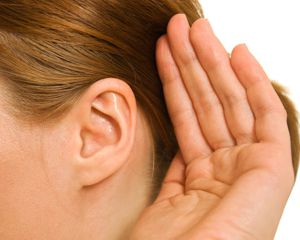
blog-67-ear-with-hand

Brenda’s Blog – May 3, 2016

“They are talking so fast I can’t get the words to go into my ears.”

My grandson’s comment made me laugh. Then it made me stop and think. How many times have I had trouble “getting the words into my ears?” The barriers of dialect, rhythm, decibel level, content, or even interest made it hard for me to transform sound waves into recognizable words.

Mom and I loved watching the British comedies together. We laughed over and over at Hyacinth’s insistence on pronouncing her surname “Bouquet” rather than the naturally assumed pronunciation of their name “Bucket” as it was spelled. It never got old. Dad, however, did not enjoy them because he said he just couldn’t understand the words. His ears were not attuned to the high pitched, British voice.

In one version of the Bible the word “listen” is found 420 times; the word “hear” 1384 times. In contrast, the word “speak” is found 541 times. Listening is regarded as an important skill, at least to the Biblical authors.

Charles Stanley is a renowned Baptist preacher from Atlanta. Part of his delivery style is the sudden “LISTEN!” which he integrates frequently into his sermon. He emphasizes his points with punch.

“He who has ears to hear…” is a common Biblical phrase. Listening and hearing are important elements for mature, healthy people.

Listening is a significant topic in training classes. We are taught to “be present” at all times, alert and engaged.

That is hard, isn’t it? My mind likes to take its own road trips at times. Sincere listening is an expression of respect. But it isn’t always easy. Like most skills, it deserves attention and practice.

The next time you have a hard time getting the words in, think about honing your earfulness.

Read More

Disciplined Skills

blog-66-kid-reenactment-marching

Brenda’s Blog – April 19, 2016

“He told me I forgot to nod, so I made sure I didn’t make that mistake again.”

My fifteen year old grandson and I are reenactors. Yes, at 72 I have found my calling! He and I are members of Neeley’s Roughnecks, an artillery group. We have uniforms and travel as many as six hours to participate in Civil War events.

Colby loves the jerk position – the one who wears the lanyard and applies the primer which then results in the explosion. (If any of you are cannoneers, forgive me if I lack the correct terminology). In simple terms – he makes the gun go “boom!” There is a very precise protocol for each position.

On Saturday he worked on a different cannon with a different officer (gunner). For one of the firings he missed one step and was reminded of the steps. Rather than chafe under the correction, he recognized the misstep and immediately worked to correct it. He did not miss one step the rest of the day.

The Bible tells us to “study to show ourselves approved.” We are not to be people who merely shoot from the hip. (Pardon the imagery) We are to be disciplined, prepared, and ready for action. Sloppy habits and lackadaisical behaviors are not marks of leaders. I grew up hearing “pay the price” as the byword for readiness.

How we accept correction is a sign of our character. If we bow our backs and refuse to change, we are immature and will diminish our growth. Those who are truly concerned about our progress will point out mistakes not to gloat or criticize but keep us aligned with our goal to be our best.

A key element in this situation was the credibility of the one bringing the correction. Colby had respect for the man’s experience, training, and knowledge. He trusted the ability of this officer to know how to perform at the highest levels. And in knowing this, he readily accepted the admonishment and succeeded.

Read More

So Wise

blog-65-raised-hand

“There are partyers and larners.”

The woman carefully instructed the young college student. “You are going to find partyers (holding up her left hand) and larners(holding up her right hand.) Her twang and emphasis on “larners: caught my attention. She went on to tell him one day the partyers will be here (lowering her left hand) and the larners will be here (raising her right hand).

The student sat quietly and then said, “I guess I am a larner.” She smiled broadly.

She wasn’t a professor. In her conversation, she told him she didn’t even have a high school diploma. BUT, she was so very wise. And the visual way she expressed her point got his attention. He was feeling down because he didn’t feel he belonged at the school. After their talk he walked away convinced he was indeed a “larner” and that he would one day be on the side of the upraised hand.

My Dad used to talk to me about “paying the price” for accomplishment. There is sacrifice attached to achievement.

We choose our groups and we then choose the results. Decisions have consequences and outcomes. Certainly, those who opt for partying can change course and grow up, but those who walk the path of “larning” rarely regret it.

I walked away thankful for that woman whose formal education was quite limited, but her life experiences and wisdom had great depth. It encouraged me to take time to sit down with younger ones, listening to their stories and supporting them in their journey.

And it challenged me to continue stretching – for “larning” doesn’t have an end point.

Read More

In Tune

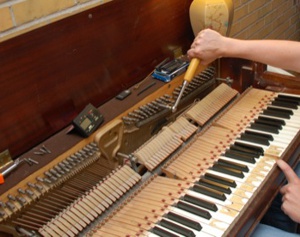
blog-63-piano-tuning

“How long’s it been since you tuned your piano?”

When I was eight my parents bought me a Baldwin Acrosonic piano. It became a dear and faithful friend. By the time I gave it to a young seminary wife whose dream was owning a piano this instrument had thousands of moving miles wrapped around its strings.

Ten years ago a new Baldwin piano joined me – this time a grand with a glorious sound. We immediately bonded. Losing intonation was a red flag – my piano was displaying a distress signal.

This week I found an outstanding tuner whose sensitive ear and touch restored the sounding board to its optimum level. As soon as he left I sat down to play. The robust, clear sound thrilled me.

As I ran up and down the keyboard I started thinking about the necessity for my own tuning. Are there times when someone asks me, “How long has it been since you were tuned?” What does it take to carefully check each string, to make sure the tension is well-adjusted? Who can help listen and tweak motivations, decisions, and actions?

When we fail to stop and assess, our lives can start sounding a bit tinny. We begin to sound a bit off.

A great pianist once said, “When I don’t practice one day I know; two days and my coach knows; three days and everyone knows.” A life well-tuned is the same way. We can slowly grow out of tune and eventually everyone knows.

Is it time for a tuning fork? Stop before the rest of the world grimaces! Begin the joy of perfect intonation.

Read More

Performance Standard

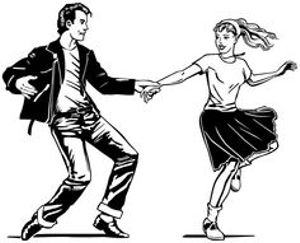
blog-63-fifties-dance

Brenda’s Blog – March 8, 2016

“Do you love me – now that I can dance?”

As a child of the 50s and 60s, I grew up with rock and roll… the real stuff… the “Rock Around The Clock” type. When ads for nostalgic record collections play, I temporarily drift back to high school dances. And then almost immediately I think of my yearbook with smiling faces of “Best Dancers.” My picture wasn’t there.

We grew up in the golden age of peacetime economic growth and promise. We received advantages unafforded to any other generation. We thrived – but we learned about behavior modification and manipulation.

“Do you love me (do you love me); Do you love me (do you love me); Do you love me – now that I can dance?” Our music didn’t advocate drug use, misogynistic philosophies, or violence, but messages of people pleasing washed over us.

Young women sat by phones on weekends mimicking Vikki Carr’s prayer:” Let it please be him, oh dear God, it must be him, it must be him; or I shall die, or I shall die.” Messages of women without men as losers plagued and punished us. We bought into the simplistic rules of “The Book of Love.”

Thankfully, we learned we wouldn’t die and we learned that dancing wasn’t the only road to love and happiness.

Sadly, performance based relationships didn’t disappear with the demise of these heart wrenching ballads. When I took my first corporate position this advice was given to me: “Know what makes Papa smile and know what makes Papa frown.”

Understanding personality and communication styles is a healthy skill; sacrificing personal development and adopting a false persona to advance is unhealthy.

Finding your own path and eschewing the roads strewn with people pleasing traps is part of the maturing processing. If you are a dancer, swing on, but not because it brings love, but because it brings great joy.

Where do you shine? Where is your “best” picture? Identify and personify – find success because you are the very best “you.”

Read More

RIGHT NOW!

blog-62-Chocolate-Bundt-Cake

Brenda’s Blog – February 23, 2016

“You know you want me!”

The table tent card featured a mini chocolate Bundt cake dripping with rich, chocolate frosting. The photo was enticing and the words made me laugh – then think. Some ad agency definitely had the pulse of the American consuming public. “I want it and I want it right now!”

Delayed gratification is apparently outmoded. Waiting to satisfy a want is passé. We are trained to want and to want immediately. Does this build character? I think not. There is a healthy element to waiting.

A couple lost a great deal of their assets. They sought counsel in dealing with the ramifications. An unexpected one was the reaction of those they counted as friends. They were no longer included – as if their financial misfortunes were a communicable disease. The other seemed to be illogical, but made great sense to them. “We are behind on our spending.” Getting what they wanted when they wanted it was a normal pattern of life. To suspend their consumerism made them feel off balance.

HGTV runs stories of couples in all economic brackets buying houses. No longer do they look for utility and houses “they can live with until they can afford to upgrade.” Too often a young couple avers, “Oh, we couldn’t live with this – this is a total gut job.” They believe they deserve the finest amenities, finishes, and features. Starter homes exist only in realtor ads. If they had the money, that might make sense, but too often they are going into deep debt.

Strong leaders know how to set a long range vision with short term mile markers. They know how to motivate others to reach for more than just the immediate. They understand the value of plans which will build a solid foundation. Grabbing the immediate often undercuts the delayed payoff.

Yes, that cake looked delicious; yes, it would have tasted great. But it wasn’t the time and it wasn’t worth the money. One day it may be, but not that morning.

Read More

Cause and Effect

blog-61-the-shadow

Brenda’s Blog – January 26, 2016

“The weed of crime bears bitter fruit – crime doesn’t pay – the Shadow knows!”

My faithful companion on my road trips is the Sirius XM channel Radio Classics. I laugh with the comedians, learn from the history serials, get goosebumpy from Suspense and the Traveler, but totally revel in the investigative shows like Johnny Dollar, or The Shadow.

True to the 40s and 50s right always triumphed over wrong. And crime did not pay!

When I switch to the news stations I am stunned by the inversion of this principle. There is very little evidence of right and wrong. Political correctness, tolerance, and comfort have replaced standards and expectations.

Recently, a school announced they were sending report cards to parents, but giving out “grade enhanced reports” to the students so they wouldn’t feel bad about themselves and be discouraged.

The next generations need to understand the value of making good choices. And understanding the penalty for bad ones. But if our culture keeps blurring the lines and rewarding incompetence we will suffer dire consequences.

“Why should I work hard for $8 an hour when I can get $100s by selling drugs?” The young man was asking a serious question, not taunting me. When you erase the weight of the law and the measure of healthy values, this question is valid. The answer isn’t to eliminate the criminality, but to instill an understanding of human life value and the impact of such actions.

The current norms bewilder and sadden me. I guess I will continue listening to radio heroes capture the bad guys assuring them “crime does not pay.”

Read More

Driving Wisely

blog-60-hitchhiker

Brenda’s Blog – January 26, 2016

“Prison area – do not pick up hitchhikers!”

As I drove along highway 25 in Kentucky on my way to Indiana, I glanced at the road sign and smiled. It is hard to imagine a prisoner’s standing out by the road with his thumb extended. And, it is even harder to think of someone who would freely offer a ride. Clearly, this has happened because the warning sign in bold letters was necessary to protect the public.
Then I started thinking about the spiritual prisons in our lives. And how we too eagerly open up the door, accepting hitchhikers. We allow felonious emotions such as fear, greed, anger, and unforgiveness to enter our souls. In so doing we become embroiled and endangered and imprisoned.

We are created in Christ Jesus for freedom, not bondage. We are given the grace of God to break the chains which hold us down. We don’t have to accept the hitchhikers of iniquity and injustice. When circumstances tempt us to relinquish our liberty, we can say no. We were released for good works and given the power to run without the shackles of past failures, unhealthy relationships, or severe losses.

Where are your prison areas? Where does the enemy of your soul want to send out a malicious hitchhiker to burden you? Heed the words of warning: lock those doors, roll up the windows, and keep on driving. And remember orange jumpsuits are not a fashion statement!

Read More

Motivation

blog-59-motivation

Brenda’s Blog – January 12, 2016

“Were they inspired or directed?”

After the horrific tragedy in San Bernardino, a parsing of words began which befuddled most – to the point of bemusement. The pundits argued over influence: inspired or directed? Apparently, this made a huge difference to them. But it was certainly not an argument worth pursuing by the families of those who lost loved ones.

In the past weeks I have been considering those terms as we look at leadership styles. Do you exercise persuasion and inspiration or are you more directive? What does that say about you? About those you influence?

We think of role models as sources of inspiration rather than direction because they have no solid line relationship to us. We think of parents with more behavioral control. As a grandmother I clearly understand my realm of authority in the inspirational category. Of course, there are circumstances when I exert “direction,” but for the most part, I employ the persuasion mode.

How do you like to be led? Is it more comfortable to be shown by example or given explicit instructions? Or perhaps you like a combination of the two. Currently, many volunteers help me in my non-profit work. The age old cliché of volunteer organization as “herding cats” is sometimes accurate. The art of persuasion is more often used and the skill of persuasion is necessary to light fires which activate.

Which form of leadership is longer lasting? And is there a difference between inspiration and motivation? Does one have a longer lasting shelf life? Whatever results in permanent change is more effective. My sweet neighbor who leads a weight loss group repeatedly talks about “life change, not short periods of food deprivation.” When someone is motivated to alter a pattern, inspired activity occurs, then serious transformation is realized.

Consider yourself and those around you, asking the question: “Am I leading in a way appropriately evoking the highest and best response?” Next time, decide if inspiration or direction is the best way to go.

Read More
«‹2425262728›»

  • Brenda A. Smith shares a TV Interview about LeTourneau-BWFLI event

  • Fred Smith Sr. shares a lifetime of Encouragement at Centennial Celebration

  • Mark Modesti TED Talk – The Argument for Trouble

  • Student Impact at Emmaus Bible College

  • BWFLI Impacts Lindsey Wilson College

Categories

Archives