BWFLI
  • Facebook
  • Home
  • Blogs
    • Brenda’s Blog
      • Brenda’s Blog
      • About Brenda A. Smith
    • Weekly Thoughts
    • Breakfast With Fred
      • What is Breakfast With Fred?
      • About Fred Smith, Sr.
      • Breakfast With Fred website
  • BWFLI Roundtable
    • BWFLI Launches the Roundtable
    • Introduction-Schedule-Bios
    • Ron Glosser-Fred Smith chapter
    • Perseverance Book
    • 200 Mentoring Questions
    • Jarvis College BWFLI poster
    • Alice Lloyd College poster
    • Lindsey Wilson College poster
  • Leadership Online
    • Leadership Team
  • About Us
    • What is BWFLI?
    • What is Breakfast With Fred?
    • About Fred Smith, Sr.
    • About Brenda A. Smith
    • Contact Us
  • Please Donate
    • Click Here to Donate
    • Why Give to BWF Project, Inc.?
  • Home
  • 2015 (Page 3)

Jump Up!

blog-52-kids-reenactment

Brenda’s Blog – October 6, 2015

“Resurrect!”

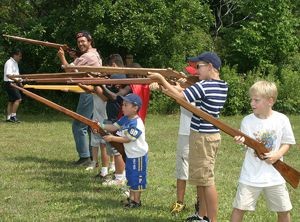
My 14 year old grandson and I are reenactors with Neeley’s Roughnecks, an artillery unit. The battle of Elkhorn Tavern (or Pea Ridge) resulted in the loss of nearly 4,000 lives. Men (and women) fought and died on that rolling farmland in Northwestern Arkansas.

This weekend we shared the experience with hundreds of others. Rarely are the guns overrun. The artillery generally stands strong, firing until the end of the battle. However, this time the infantry fell back, leaving the cannons vulnerable. We fought with our implements but were overcome. We fell to the ground by the guns.

“How long do we have to be dead?” was the question I heard from someone nearby. “Until the battle is over” came back the answer.

Finally, the commanding general shouted, “RESURRECT!” At this point we all rose to our feet, shook hands, and packed up to go back to our urban environments.

I could not avoid thinking about the symbolism and the application to our lives. We are all in a battle, aren’t we? Sometimes we win the skirmishes and sometimes we lose. But the battle goes on.

At some point the general will shout throughout all creation, “RESURRECT!” The dead will rise and those who are still living will join them in the air. What an exciting thought.

Applying this to our daily lives makes us think about relationships we have. Aren’t there some which seem to be dead, but can be revived? Aren’t there friends, children, grandchildren, who seem to be dead in sin but hopefully will hear the voice of the Master calling them to life? What about our hard hearts? We may feel dead, but there is life everlasting which is available to us.

Let’s stay in the battle, but let’s know the call is on the horizon – RESURRECTION DAY IS COMING!


Read More

Do The Right Thing

Weekly Thought – September 22, 2015

Fred was once told he “didn’t understand how things are done” when he took an ethical stand requiring personal loss. Still, he held his position. He wasn’t a Don Quixote who jousted at windmills – he didn’t “take on” issues for the sake of crusading. He did, however, dig in when it came to an ethical posture, despite what the culture expected.

Do The Right Thing

The integrity of a leader often is shown in the stand he/she takes for right against mistaken popular concepts. This isn’t done to be difficult, or different, but daring to be right, avoiding the temptation to jump into the downstream flow. Christian leaders search for the biblical right and wrong in each issue.

The author Chaim Potok said a true leader is never absorbed in the stream in which he swims. Scripture would say this leader is transformed, not conformed.

Our society is facing many positions that need biblical challenge and clarification. For example, relativism, alternative lifestyles, personal responsibility versus rights, acquisition and distribution of wealth, racial reconciliation, political expediency, self-love, and the power of peer pressure.

Values and ethics have become a hot subject almost to the point of being a cultural fad. Think tanks embrace the topic; philanthropists contribute great sums for research; universities endow chairs to study the subject; and writers produce piles of best-selling volumes. However, they generally ignore the biblical imperatives, leaving the study to
human behavior.

At a Norman Vincent Peale conference on “values-based leadership,” I listened to top experts discuss the topic. I had no disagreement with their illustrations and points. However, when I spoke, I told the audience we need to root our human values in divine virtues. If we do not put down deep biblical roots, we end up controlled by our human desires which are variable due to our selfish interests.

True authenticity requires an ethical system founded in biblical virtues which have not been humanly manufactured, but discovered because they were given by God. Our authority needs to come from outside ourselves.

Newton did not create the law of gravity – he observed and codified it. Just so, we cannot create true virtue – but only discover it and make it the foundation for our values.

This week consider: 1) How are my values influenced by the culture? 2) What challenges my ethics in my work, in my home? 3) When does my thinking get fuzzy about biblical values?

Words of Wisdom: “If we do not put down deep biblical roots, we end up controlled by our human desires which are variable due to our selfish interests.”

Wisdom from the Word: “I have given them your word, and the world has hated them, because they do not belong to the world just as I do not belong to the world.” (John 17:14 NET Bible)

Read More

Imperatives in Effective Speaking (Summary)

Weekly Thought – September 15, 2015

Fred outlined his Imperatives for Effective Speaking. This week we summarize the series. This Weekly Thought is longer than normal, but definitely a “keeper.” This was previously released, but it remains helpful to keep handy.
Thank you for your feedback and the practical applications of his work. And as always, thank you for your faithful encouragement and support.

Imperatives in Effective Speaking (Summary)

Speaking to an audience is an awesome responsibility. The following points are touchstones for me.

1) Ready Your Attitude – Attitude colors every word, every gesture, and body movement. Anyone who feels the audience is fortunate in having them speak is prostituting the opportunity.

2) Your Material – A speaker’s self-respect and sense of responsibility should start with content. If there is no content, there is no reason to speak. Preparation is the price we pay for the privilege of speaking.

3) Be believable – If the audience believes the messenger, it is easier to believe the message. A truth that is not believed is useless. Ask yourself: “Can I make this truth believable?” If not, then wait to express it until you can.

4) Focus on the Audience – Always speak to the audience about a subject, not about a subject to an audience. The audience is the focal point. Know their felt needs and desires before you lead them to their real needs.

5) Create a personal touch – Personal communication is like a conversation eyeball to eyeball. This creates the feeling that I know you and you know me. Good communication is more than a function; it is a relationship. To be effective, it must be personal.

6) Create an enjoyable atmosphere – Take your subject seriously, but not yourself. Let people join in the enjoyment with you. Make sure it is more than entertaining – make it profitable. To be enjoyable, both the emotions and the mind must be stimulated.

7) Maintain human quality – Demagogues and con men sound like messiahs. They lack the reality of integrity. Respect others’ intellectual integrity by speaking person to person. Humor is a humanizer.

8) Utilize basic presentation skills: a) fire in the voice; b) develop good rhythm and cadence; c) adjust the pace of ideas and words; d) use a sincere tone; e) enunciate clearly; f) avoid affectations; g) use appropriate volumes for subject matter and size of the audience; h) practice natural gestures; i) choose words suitable for the subject; j) maintain continuity between words and subject.

9) Communicate with purpose – Before you try to communicate, determine what you want to happen at the close. I want to change or solidify attitudes into convictions and positively affect behavior.

10) Speak with power – When we speak for God, we should speak or communicate God’s message for God’s glory, not our own. The Spirit must convince; we can only be present. When we desire to be empowered we must have as pure a motive as humanly possible.

11) Pray before speaking – Prayer should be an ingredient of the preparation, not a sauce poured over it. If you have prayed adequately before speaking you won’t need to ask the audience to pray for you while you speak. They should be listening. Prayer helps me to exclude the extraneous – the ego licks, the hidden agenda items, and the subtle kicks.

12) Learn the sacredness of brevity – “Lord, fill my mouth with worthwhile stuff, and nudge me when I’ve said enough.” Never go beyond the allotted time. Don’t satisfy them so much they’ll never want to hear you again.

This week think about: 1) Which point jumps off the page? 2) How am I going to implement these imperatives? 3) When am I going to email BWF and tell them how I am using this material?

Words of Wisdom: “Speaking to an audience is an awesome responsibility.”

Wisdom from the Word: “The speech of the righteous bears the fruit of wisdom.” (Proverbs 10:31a – NET Bible)

Read More

Miles To Go

blog-51-miles-to-go

Brenda’s Blog- September 8, 2015

“And miles to go before I sleep; and miles to go before I sleep.” – Robert Frost

Frost’ poem, Stopping by Woods on a Snowing Evening is one of America’s favorites. The imagery stimulates our imagination. The poignant words evoke a variety of emotions.

Of course, reflection on the road not taken has been translated by Scott Peck into “the road less traveled.” Sermons, commencement addresses, pre-game pep talks, and parental admonitions have all alluded to the opportunities of life and making good choices.

But is the road not taken always a negative? I think not. Certainly not as poetic, but surely as true is the title of the country western ballad, “Thank God For Unanswered Prayer.” The road not taken and the prayer unanswered can be a source of tremendous gratitude.

One of the distinct advantages of quickly approaching the 3/4 century mark is reflection. Remembering choices, good and bad; reliving experiences, good and bad; rehashing conversations, good and bad – all part of the reflective process. Usually my conclusion is gratitude for those roads I didn’t take and for those prayers God answered with a “no.”

Seeing His hand of protection when my senses took a temporary vacation humbles me. When I recognize the learning through difficulties and problems I am grateful growth is a process.

Walks through woods on snowy evenings are rare in East Texas, but we can still enjoy the solitude of pine trees, white-tipped or not. Looking up at the trees puts life into perspective. Musing about what they have seen, give me a longer view. The music of the trees would thrill Sondheim.

Many times I have quoted the “miles to go” with a sigh and a shrug. Today I realize what a gift those miles are. The experiences they represent will provide fodder for future reflection. Undoubtedly those miles will include some missteps, but they will also allow for unspeakable joys. I am thankful that there are miles to go before that last sleep. And I am most appreciative for those roads not taken.

Read More

Get It Done People – Part Four

Weekly Thought – September 8, 2015

Fred overachieved when thinking. Give him a thought and he would chase it down roads totally unknown to the civilized world. He once started thinking about words to hymns and made a list of hundreds. And, on a sleepless night he remembered the punch lines to 200 jokes. When asked to give 12 principles for high impact living, he finally ran out of paper well into the 40s. This week we complete a four week excursion into the wilds of Fred’s thoughts on this subject. There are scribbles in the margins of these pages, but we will stop with these 40. Parts 1-3 are available at breakfastwithfred.com in the Weekly Thought archives.

Thank you for believing in our work and telling us stories of being stretched by Fred’s thoughts. Continue to pray and when possible, help us financially to keep the website and the Breakfast With Fred Leadership Institute strong.

Get It Done People – Part Four

High Impact People:

31) Use money as a means, not an end. They know that money is option and they see it as a tool, not an idol. They know how to avoid the “is this all there is?” trap.

32) Unite joy and accomplishment – I wrote a section of my first book (the great undiscovered classic You and Your Network) on “Joy for the Journey.” Work is part of God’s blessing. Accomplishment and achievement bring a sense of purpose and well-being.

33) Emphasize responsibilities, not rights – responsibilities laminate – that is, bring people together; rights divide.

34) Properly define pleasure – There is a misconception that life should be serious and any hint of pleasure is the sure road to hedonism. Baloney! Eric Liddell gives a clear definition when he says, “When I run, I feel God’s pleasure.” Pleasure is the emotion of living life in the sweet spot.

35) Recognize reality versus image – we live in a world weary of words and longing for authenticity. Too many who adopt the “fake it ‘til you make it” mindset end up perpetually faking it and never making it.

36) Celebrate – one of my dear friends, Jack Modesett, likes to ask about goal accomplishment by saying, “How will we know when it is time to celebrate?” It is important to celebrate steps along the way to the big mile marker. And joining others in the recognition of accomplishment is key.

37) Understand the difference between character and intelligence – I have rarely seen a gifted person fail because they lacked training, or even intelligence. By far, the majority of failures come because of character flaws. Check the plumb lines to make sure the character is aligned.

38) Create an environment of encouragement – they know how to make others see their gifts, use them, and feel good about themselves.

39) Make long term goals – instant gratification isn’t a hallmark of high impact people. A young man told me recently his idea of long term planning was lunch the next day. That man has much to learn!

40) Aren’t surprised at the price tag for success – I once told a woman who complained about her executive husband’s hours: “Madam, you want the earnings of a racehorse and the placidity of a mule.” There are no shortcuts.

This week consider: 1) Out of the 40 principles, which one grabbed me? 2) How much do I want a high impact life? 3) What am I willing to do to fulfill my potential?

Words of Wisdom: “Madam, you can’t have the earnings of a racehorse and the placidity of a mule.”

Wisdom from the Word: “For the love of money is the root of all evils. Some people in reaching for it have strayed from the faith and stabbed themselves with many pains.” (1 Timothy 6:10 NET Bible)

Read More

Get It Done People – Part Three

Weekly Thought – September 1, 2015

Fred was born September 1, 2015. His Mother was his guiding light. She taught him the value of ideas and their ability to affect outcomes. The limits placed on him through physical disabilities and economic lack did not dampen his dreams. The little boy who listened to the world on his crystal radio in the attic became a man who stretched others. We continue with his principles for high impact living. Parts one and two can be accessed at www.breakfastwithfred.com in the Weekly Thought archives or on www.bwfli.com

On this day when Fred would have been 100 years, please tell someone else about the website and the Weekly Thoughts. Help us expand his reach and deepen the impact.

Get It Done People – Part Three

High Impact People:

21) Vision of success – They have a picture of who they want to be and what they want to do. They understand the old Chinese proverb: “If you vision is one year, plant wheat; the years, plant a tree; and 100 years, plant people.”

22) Associate with the Best – Be the smallest fish in the biggest pond. Always put yourself in the arena with stronger players. And remember to associate for growth and development, not social climbing.

23) Travel – Expand your view of culture and cultures. Take calculated risks and enjoy challenging experiences.

24) Read – My friend Charlie “Tremendous” Jones says, “Except for the people you meet and the books you read, you will be the same person in five years as you are today.” The old axiom, “leaders are readers” still holds true. But, be discerning. Read in your areas of development. And don’t feel like you have to read something just because somebody recommends it, or sends it to you. Don’t just read what you agree with – let others challenge you.

25) Write – My mentor Maxey Jarman demanded written solutions to any problems I could recognize. He reminded me that thoughts untangle as they pass through the mind and out through the point of the pencil. Writing clarifies.

26) Are Respected by Others – International developer Trammel Crow said, “I only want executives that others want to see succeed.”

27) Pick the right mentor – Never accept a volunteer mentor. Understand the principles of a mentoring relationship. Know what the responsibilities of the mentor and the mentoree.

28) Demonstrate humility – My favorite definition of humility is: “Humility is not denying the power you have but admitting it comes through you, not from you.” Meekness is harnessed strength, not weakness.

29) Operate ethically – One of my friends had a plaque on his desk which read: “You can count on me to be who I say I will be and do what I say I will do.” Nick Moore of Price Waterhouse Coopers put it this way: “It is important to know what you stand for and what you won’t stand for!”

30) Follow Jim Collins’ Good to Great model – “Have the wrong people off the bus, the right people on, and the right people doing the right things.”

This week think about: 1) Which of these strikes me the hardest? 2) Where am I influencing others? 3) Who could benefit from Fred’s wisdom this week?

Words of Wisdom: “Humility is not denying the power but admitting it comes through you and not from you.”

Wisdom from the Word: “When pride comes, then comes disgrace, but with humility comes wisdom.” (Proverbs 11: 2 NET Bible)

Read More

Helping Hand

blog-50-helping-hand

Brenda’s Blog – August 25, 2015

“Here, son, let me help.”

Our community pool requires a shower before entering. The apparatus to start the water flow is quite hard to push.

The other day I watched with interest as a strong-willed young one reached up to depress the button, but without much success. Quietly, his father walked over, offered help, and then placed his large hand lightly over his son’s. Together they showered.

It hit me how many times we can either be the giver or receiver of help. But too many times we either stubbornly refuse, or fail to acknowledge the need. Seeing the partnership between father and son reminded me how important community is – for organizations, families, friendships, and faith.

And sometimes those “showers of blessing” we desire come after we work together combining strengths. One man (or woman) bands are comical and enjoyable, to a point. But no one expects great music from them. Amidst the clanging, yapping, and tooting, melodies do arise, but seldom would you confuse them for a symphony orchestra!

When we are assigned a task, or volunteer for a job, we must keep our options open for enlisting aid and assistance. Often the accomplishment occurs because someone graciously says, “Here, son (daughter), let me help.”

And on the other hand, we must always be aware of situations which would benefit from an offer of help – without creating an overbearing atmosphere of criticism. Discerning the right time and the right word is the key to effective relationships and leadership. The advancement of aid should never be seen as a statement of the other’s ineptitude.

Community is the interweaving of many hands to accomplish one purpose.

Read More

Get It Done People – Part Two

Weekly Thought – August 25, 2015

Fred’s interest in those who pursued their gifts motivated much of his thinking. In part of two of “Get It Done People” he continues his thinking about high impact living.

Gratitude was one of Fred’s favorite emotions. He practiced it regularly. And for you we are most grateful. Thank you for your encouragement and consistent support.

Get It Done People – Part Two

High Impact People:

11) Capture the concept of plateauing – they understand the process of growing, assimilating, then growing again. When you grow too fast, you have holes.

12) Keep stress vertical – there are two types of stress: horizontal and vertical… one pulls you apart (horizontal) and one energizes and focuses (vertical). The goal of life isn’t being stress free, but understanding and developing healthy stress which energizes.

13) Have and use a sense of humor – What you cry about today you will laugh about tomorrow. Humor is the lubricant of the spirit. Without humor, the gears clash and the engine burns out.

14) Don’t take destructive action – “Vengeance is mine, says the Lord.” Too many people carry around a stash of poison pills created from ill feelings and vindictiveness.

15) Anticipate – minimize surprises – Every top executive I know has a cardinal rule: avoid surprises. Preparation and good hiring practices allow them to operate confidently. I think through all the possibilities of a decision or action and thus spare myself from surprises.

16) Work with cause and effect – The scripture tells us we will reap what we sow. That is more than a Biblical admonition. Understanding consequences is a hallmark of high impact leaders.

17) Operate and articulate meaning of life – a clear understanding of purpose is critical. I find strong, meaningful internal dialogue is part of the tool kit for leaders.

18) Have emotional control – they know how to stretch their emotional wheelbase. They have a broad repertoire of emotions, a disciplined imagination, are courageous, and know how to eliminate negatives. They know how to offset external pressures by internal strength. John Wayne said, “Courage is being scared to death and still saddling up.”

19) Choose their attitude – Frankl in “Man’s Search for Meaning” said we have no control over our circumstances but we can choose our attitudes in the midst of them. High impact people direct their attitude.

20) Give themselves to something bigger than themselves – A big vision, a big goal, a big dream, a big cause. These move leaders to think bigger. Always stretch.

This week think about: 1) What pushes me to stretch? 2) What are the roadblocks to growth? 3) How can I apply these this week?

Words of Wisdom: “The goal of life isn’t being stress free, but understanding and developing healthy stress which energizes.”

Wisdom from the Word: “I realized that wisdom is preferable to folly, just as light is preferable to darkness:” (Ecclesiastes 2:13 NET Bible)

.

Read More

Get It Done People – Part One

Weekly Thought – August 18, 2015

Fred began thinking about a question put to him by a group of high achievers: “Fred, what would you say to us as we enter our 50s and want to keep moving?” He put together a list called “The 12 Principles of High Impact Living.” True to himself, the list soon grew and developed into well over three dozen. For the next three weeks we will outline some of these principles.

Fred finished his earthly assignment on August 17, 2007. His thinking lives on and his heartfelt desire to be useful continues bearing fruit. This week we do part two of the Principles of High Impact Living.

As we think about the years since Fred died, we look at all the Lord has done to expand the reach and deepen the impact of his lifework. You have been with us and for that we are grateful. Remember to share these thoughts with others and encourage them to sign up on the mailing list. We appreciate you.

Get It Done People – Part One

High Impact People:

1) Link passion and uniqueness – they find their particular area of genius and maximize it by utilizing it effectively.

2) Minimize religion and maximize spirituality – Christianity isn’t a religion; it is a relationship. Knowing about God isn’t faith but growing in trust and obedience is.

3) Endure pain to win the gold – Bob Richards, the Olympic vaulter, always asked budding athletes: “What do you with the pain?” Pain isn’t optional.

4) Understand that discipline isn’t punishment – an unruly, chaotic life achieves little. There is always a price to pay for accomplishment. Discipline allows the freedom of productivity. Good habits are there for the times you don’t want to work.

5) Save, invest, then speculate – “Las Vegas Funds” are at the top of the financial pyramid, not the bottom. The foundation of proper financial planning gives option in later years.

6) Control their time and appreciate the dramatic moments – Just as I don’t let other people spend my money, I don’t let them spend my time. Those who capture the drama of time can be particularly impactful. For example, Rudy Giuliani after 9/11.

7) Focus – scattershooting is for amateurs. Big game hunters don’t go out carrying shot guns.
8) Are Energetic – Know what creates energy and what uses it and manage it well. High impact people are generally high energy, as well. They know how to harness the strength.

9) Balance their lives – They stay out of the rat race and avoid obsessions. They integrate all the spokes of their wheel as my friend Zig says. The ride gets bumpy when all the emphasis is on one area.

10) Nurture their curiosity – The great scientist Gerhard Dierks told me to always cultivate my ignorance. “Go to bed knowing less than you did the day before because you see how much more there is to know.”

This week think seriously about: 1) What makes me a high impact person? 2) Which of the ten stimulates my thinking? 3) How can I think deeper about this subject?

Words of Wisdom: “Take the gift that God has given you and use it, and you will stand before great men.” (Fred’s paraphrase of Proverbs 18:16)

Wisdom from the Word: “Is not wisdom found among the aged? Does not long life bring understanding?” (Job 12:12 NET Bible)

Read More

Waste Not, Want Not

blog-49-gather-things-closet

Brenda’s Blog – August 11, 2015

“Gather up the broken pieces that are left over, so that nothing is wasted.” (John 6:12)

Jesus feeds five thousand people then instructs the disciples to pick up the leftovers. They gleaned 12 basketsful.

Why should this interest us? We usually focus on the magnitude of turning four small biscuits and two sardines into an ample feast. But isn’t there more to learn?

Those snatches of time can be thrown away easily. Those smidgens of energy can be wasted. But think of the possibilities. I have a friend who studies scripture on flash cards as she sits in carpool line. Others (who are way more fit than I) grab moments to do leg lifts, jumping jacks, or deep breathing exercises.

A successful salesperson keeps notepaper with stamped envelopes close by in the car. Yes, there are some who actually send handwritten notes. Those little pieces of time allow her to keep in touch in a most personal way.
My Dad used to clip newspaper articles, apply a sticky note with “Thought you’d be interested” and then send off to friends. He used extra minutes to stay in touch.

I am not recommending a frenetic, “use-every-minute-” lifestyle. But I do think there are baskets left uncollected which may be used for the benefit of others.

The Bible tells us to “redeem the time.” To me, this means adopting an attitude of stewardship which takes into account all of our resources: time, talent, and treasure. To live redemptively we lay each day before the Lord asking for the best use of ourselves.

Practically, when we take that extra minute to throw something into the wash, put a file away, kiss that grandchild, or make that quick phone call we are good stewards of those extra baskets.

I want to think constructively about making the most of everything I am given. I want to see God’s big miracles, but I want to be ever aware of those important leftovers.

Read More
‹12345›»

  • Brenda A. Smith shares a TV Interview about LeTourneau-BWFLI event

  • Fred Smith Sr. shares a lifetime of Encouragement at Centennial Celebration

  • Mark Modesti TED Talk – The Argument for Trouble

  • Student Impact at Emmaus Bible College

  • BWFLI Impacts Lindsey Wilson College

Categories

Archives