BWFLI
  • Facebook
  • Home
  • Blogs
    • Brenda’s Blog
      • Brenda’s Blog
      • About Brenda A. Smith
    • Weekly Thoughts
    • Breakfast With Fred
      • What is Breakfast With Fred?
      • About Fred Smith, Sr.
      • Breakfast With Fred website
  • BWFLI Roundtable
    • BWFLI Launches the Roundtable
    • Introduction-Schedule-Bios
    • Ron Glosser-Fred Smith chapter
    • Perseverance Book
    • 200 Mentoring Questions
    • Jarvis College BWFLI poster
    • Alice Lloyd College poster
    • Lindsey Wilson College poster
  • Leadership Online
    • Leadership Team
  • About Us
    • What is BWFLI?
    • What is Breakfast With Fred?
    • About Fred Smith, Sr.
    • About Brenda A. Smith
    • Contact Us
  • Please Donate
    • Click Here to Donate
    • Why Give to BWF Project, Inc.?
  • Home
  • 2015 (Page 2)

Turbulent Times

Weekly Thought – November 17, 2015

Fred spoke to the San Angelo, Texas initial Prayer Breakfast in the 1990s. The local newspaper covered it and the article by Ron Durham captures his thinking so well, it is repeated as this week’s thought. Fred spoke to prayer gatherings from coast to coast, offering his distinctive style of Christian thinking from a businessman’s perspective.

Fred’s thoughts are most pertinent to today’s troubled environment.

Mark Modesti, member of the BWFLI team, as well as the BWF Project, Inc. board recently presented at the TED/UPS talks. Click here to hear his wise and challenging words on “Trouble.”

Turbulent Times

Despite indications that the nation is in the Dark Ages morally, there are enough true believers acting out their commission as “the light of the world” to prompt optimism, Dallas businessman Fred Smith told a local audience Thursday.

The remarks from Fred Smith, an author and inspirational speaker, were received enthusiastically by the approximately 600 people attending San Angelo’s version of the National Prayer Breakfast.

Prayer is “a relationship that unites us instead of a doctrine that divides us,” Smith said. At another point he noted that “moral problems spiritual solutions.”

Acknowledging that “these are turbulent times because we are between Christian and non-Christian time,” he compared the situation to a trapeze artist leaving the swing and tumbling through the air reaching for the other swing.

Citing others who agree that the nation is in moral decline, Smith referred to Russian dissident Alexander Solzhenitsyn’s comment that “the Ten Commandments have become the Ten Suggestions.” He then observed that the culture’s materialistic bent only points to “a hole in the soul,” and that “many people have means but very little meaning.”

On the brighter side, Fred Smith cited ministries from inner city Seattle to the nation’s prison to professional sports to indicate a basis for optimism. And he told of people who have said, “I want to move my life from success to significance.”

Smith posed a blunt challenge to members of churches and synagogues to live up to the claims of their faith, noting a recent survey that indicated only 10 % of church and synagogue members show any significant difference in lifestyle.

Smith has served on more than 20 boards, including Cummings, Inc, Word, Inc, Youth for Christ International, and the Zig Ziglar Corporation. He currently serves on the Christianity Today, Inc. board. He holds two honorary doctorate of law degrees.

This week think about: 1) What is my response to our turbulent times? 2) How am I maximizing faith and minimizing fear? 3) What would be my message to a prayer breakfast?

Words of Wisdom: “Many people have means, but very little meaning.”

Wisdom from the Word: “God is our strong refuge; he is truly our helper in times of trouble.” (Psalm 46:1 NET Bible)

Read More

A Lonely Space

blog-55-lonely-photo

Brenda’s Blog – November 17, 2015

“Do you ever get lonely?”

My sweet daughter-in-law’s question was lovingly and tentatively asked. She didn’t want to intrude, but she wanted to check on me.
“Of course, I do.”

How would you answer that question? Probably in the affirmative, for loneliness is part of the human condition. The real question is: “What do you do when you get lonely?” or “When do you feel loneliest?”

A sociological study titled “The Lonely Crowd” spoke to us of human disconnection. I spent two days this week on a college campus celebrating the opening of the Bob Briner School of Business. The speakers excellently and pointedly addressed the students on leadership, character, and even job seeking skills. No matter what the topic, each one addressed the issue of virtual friendships and the need for true human interaction.

We can’t be fully human if the majority of our relationships begin and end on an electronic device. Eye contact becomes “I” contact. Warm greetings and handshakes are traded for emoticons and abbreviations.

USA Today featured an article on prisoners who are held in solitary confinement and the outcome of their lives after release. Of nine studied, all nine returned to prison. Extended solitary existence doesn’t mesh well with communal communication.

But we can be in a shoulder-to-shoulder room, flanked by laughing people and broad smiles, yet still be lonely. We need connection to quell those pockets of longing. How do we do that?

When you are in a strange environment, do you think about your own comfort, or seek to alleviate the anxiety of someone else you notice? What words do you prepare to initiate conversations? What heart and mind sets are established before you enter into these situations?

Yes, precious daughter-in-law I get lonely… I get scared… I get eager to run away, but when I accept my role as a transmitter of God’s grace to others, it gets easier. When I “turn my eyes on Jesus,” the pangs subside… some. There will always be times when the desire to feel fully accepted, included, and integrated will rise up. But when I think of those who need a word of encouragement, a hug, or just a smile, I understand how my loneliness can be converted into loveliness.

Read More

Notes on Aging – Part Two

Weekly Thought – November 10, 2015

Fred’s desire to finish well caused him to think about the process. He refused to cruise into his senior years without serious thinking. His thoughts help all of us prepare for the later years. His wife, Mary Alice, maintained a youthful outlook. In her late 80s she finally allowed others to consider her elderly.

Visits to Asbury University, Lindsey Wilson College, Alice Lloyd College, and Greenville College signal the beginning of the activities for 2016 and 2017. Thank you for praying as work is underway.

Notes on Aging – Part Two

The psychologist Erik Eriksen wrote of moving deterioration to the periphery. This has been extremely helpful for me. It keeps me from bemoaning what I used to be able to do and focus on what is left. The core of my being is founded on the indestructible so that never changes. Things like physical disabilities, lack of mobility, and restricted social engagements all get pushed out to the sides. My gifts, my focus on the significant, the strengthening of relations – all these remain alive and well. My uniquenesses never change – just the way I operate does.

In aging I have found several activities I would recommend:

1) Express love. My Mother taught me the importance of touch in older age. Other friends showed me how critical it is to stay in touch. I always tell those who call, “Keep me in the loop.” One aspect of love you wouldn’t ordinarily expect is the freedom to express fear. Love is an outward motion, desiring the best for the other person.

2) Establish disciplines – It is easy to slide into schedules with no routine. I find it key to stay in regular contact with friends; to get dressed every day; to do all I can to maintain my health; and to keep my mind active through reading, thinking, and conversations.

3) Clarify the reputation – “Finishing Well” has always been a high priority. I want my last days to be ones of contribution and productivity. I don’t want to be a selfish old man.

4) Develop new interests – One of the areas I have appreciated in my older age is intercessory prayer. More and more people ask me to pray for them. I guess they think I am getting closer and closer to heaven so I must have more clout. But I find my physical immobility allows me spiritual mobility.

5) Maintain family traditions – As one who is challenged by holiday traditions I still see the value of bringing the family together and observing activities which become “Smith stories.” Mary Alice shared recipes with the women in the family and in doing so passed down her legacy.

6) Be realistic in regard to self – Older age is no time to try to run the sprint you missed in the mid-forties. Focus on the strengths and do not spend time trying to turn weaknesses into strengths. Understand limits without regret. See the value of each season.

7) Discuss final plans with counselors and especially with family – Let your family members know what your wishes are. Do good planning to avoid hardships and hard feelings.

This week think about: 1) Which of the seven particularly jumps out at me? 2) How can I plan to finish well? 3) What wisdom should I be passing on right now?

Words of Wisdom: “Put the deterioration to the periphery.”

Wisdom from the Word: “Even when you are old, I will take care of you, even when you have gray hair, I will carry you. I made you and I will support you; I will carry you and rescue you.” (Isaiah 46:4 NET Bible)

Read More

Windbreak

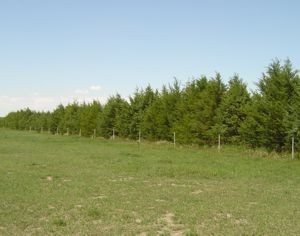
blog-54-windbreak-trees

Brenda’s Blog – November 3, 2015

“Why are all those trees sitting out there in the field?”

Driving through rural America, I could see miles and miles of farmland. “America the Beautiful” always comes to mind. As I topped a rise, I noticed a strange grove of tall evergreens, flanked by smaller trees, and then a hedge of shrubs. It looked out of place among the crops.

I approached the area and saw the house nestled among this great wall of greenery. This was not a random planting, but a purposeful grouping of trees creating a windbreak and protection for the house. The wind which blew across the fields had nothing to stop its impact unless a natural wall existed.

The residents of this house wisely constructed a shield against the weather.

I started thinking about the need for emotional, professional, and relational windbreaks. We are vulnerable to the ravages of negativity, misunderstanding, and hostility. We are open to those who accost us. What can we do? How can we help others? By building windbreaks!

How do we do that? By being firmly grounded in the knowledge of ourselves and the knowledge of God. Scripture warns us against being people who are blown by every wind – this way and that. We need to have our values, our character, and our strengths well in hand. When the blustery environment challenges us, we should be like Martin Luther: “Here I stand, I can do no other.” This doesn’t mean we are stubborn, intransigent, and “ornery.” It means we know who we are and are willing to hold because we know how we best make our unique contribution.

And then, we must know who God is. What is His character? What is His message to us? How can we appropriate His grace and mercy? When the storms come, we can be assured of His presence and His care. It doesn’t mean the weather doesn’t get bad – it just means we have a Divine Windbreak.

Read More

Notes on Aging – Part One

Weekly Thought – November 3, 2015

Fred thought a lot about aging and humor, wanting to write books on each topic. Nothing was published but his notes provide us with great insight. This week we will dip into his collection of ideas accumulated eleven years before he died.

Planning has begun for Lindsey Wilson College, Alice Lloyd College, Asbury University, and Palm Beach Atlantic University. The year of 2016 is fully booked. Please pray for those who will be on the teams, the school steering committees, and the BWF board which leads these efforts. If you can, we would greatly appreciate your financial support. We do not charge the schools for these outstanding events. Each team member receives no honorarium, and provides transportation. However, there are many costs associated with this effort. We are totally dependent upon donations for our on-going ministry.

Notes on Aging – Part One

I’m for aging – slowly, if you please. I asked an older friend which period of life he would have liked to live, he said, “As far into the future as possible.”

I started aging Sept 1, 1915; on the back of my birth certificate is my death certificate.

Life divides into two groups: those who are aging, and those who are not: those who are aging are breathing. I am convinced you can get older without getting old.

Make a list of helpful activities for older age: 1) act as glue for the family; 2) mentor by shifting from a power position to wisdom; 3) teach; 4) encourage; 5) stay in touch through exchange of clippings, letters, calls; 6) develop intercessory prayer; 7) maintain a right attitude – stay timely, appropriate, and participatory.

Make sure to understand a good philosophy will get you to the grave, but it takes a good theology to get you through the grave.

Strive for more of God and less of me.

Prepare for old age – start early: 1) create unique and meaningful relationships; 2) make sure to have good memories; 3) develop a network broader than occupation; 4) strengthen networking skills – know people who know people.

Weed out cynicism. A cynic would ride through a sewer in a glass-bottomed boat! Not a good way to spend old age. Work to eradicate resentment, jealousy, fear, and paranoia.

Finish well – finish with a flourish. Script your last chapter but leave your hands open to the Author.

This week think carefully about: 1) How well am I aging? 2) Where do I need to do more prep? 3) What aspects of my foundation are the strongest? weakest?

Words of Wisdom: “A good philosophy will get us to the grave but a good theology will see us through the grave.”

Wisdom from the Word: “You must stand up in the presence of the aged, honor the presence of an elder, and fear your God. I am the Lord.” (Leviticus 19:32 NET Bible)

Read More

Paralysis of Perfection

Weekly Thought – October 27, 2015

Fred was the master of duct tape . The house and garage bore witness to his creativity and “temporary fixes.” He knew, however, when to focus on a problem to a permanent solution. His ability to prioritize enabled him to accomplish much.

As you consider your year-end giving, would you think about BWF Project and the Breakfast With Fred Leadership Institute? We received a financial gift with the following note: “We always look forward to Tuesdays because that means Breakfast With Fred.” We so appreciate your prayers, notes, and support.

Paralysis of Perfection

Perfectionism does not work well in the imperfect realm of human organization. Any leader who insists on a goal his people cannot attain is foolish. The true perfectionist has a hard time seeing any job all the nothing at all. Psychologists find perfectionism is often a defense mechanism for those who fear failure.

Or to do nothing worth doing. There was an old torch song with the words, “All or nothing at all.” That is unhealthy in relationships and especially in the leadership of people and organizations.

Scholars can narrow their range of study to the point of obscurity. In becoming an authority on the finest points reduces the opportunity for broad recognition of mistakes. The sadness in this is that some of our superb academic minds become experts in areas that limit their application and general usefulness.

An executive’s aim is progress, not perfection. Zero-defect is an idea that years ago became a wasteful management fad. Not many organizations can afford the enormous cost in effort, money, and talent. To move from 99.44% to 100.00% wasn’t even worth it for Ivory Soap!

Since the proper measure of an executive is productivity through the economical use of resources (human and material), the ideal of perfection is counter-productive.

A friend owned a company which demanded excellence from all its employees. One project became excessive in its search for faultless performance. Finally, the CEO stepped in to say, “You are striving for a level of excellence that makes no sense… you are wasting my time, man hours, and affecting my profitability.” Excellence and perfection are not synonymous.

In the parable of the talents, Christ pointed out the management problem of perfectionistic paralysis. The one talent servant who did nothing because he was afraid to do the wrong thing was the forebearer of today’s cautious perfectionists in executive ranks.

This week think about: 1) When do I use perfectionism as an avoidance technique? 2) Where would a little duct tape suffice? 3) What helps me distinguish between excellence and perfectionism?

Words of Wisdom: “Excellence and perfection are not synonymous.”

Wisdom from the Word: “But he said to me, ‘My grace is enough for you, for my power is made perfect in weakness.’ So then, I will boast most gladly about my weaknesses, so that the power of Christ may reside in me.” (2 Corinthians 12:9 NET Bible)

Read More

Eye of the Beholder

blog-53-mountain-view

Brenda’s Blog – October 20, 2015

“The mountains spoil the view.”

Years ago I traveled frequently to the Pacific Northwest. Flying into Portland thrilled me. Leaving the mountains behind made me sigh. On one trip back to Iowa, I sat next to a farmer from Nebraska. As a plane chit-chatter, I said, “Don’t you love seeing the mountains?” “No, I don’t. The mountains block the view.” I was stunned. THE MOUNTAINS WERE THE VIEW! He went on to explain he could step out on his Nebraska porch and see for miles and miles – that was the view he loved.

I realized much of life is based on our own perspective, and experiences. I treasured the majesty of mountains; he resented the way they limited his sight line. For me to establish my preference as the rule would damage any further conversation.

In the last few weeks a dear friend and I traveled through New Mexico, Colorado, and Texas. I eagerly anticipated the ride on the Durango to Silverton narrow gauge steam railroad. The ride through the mountain passes and along the Animas River excited me. My sweet friend politely expressed appreciation for the beauty of the turning leaves, and the mighty rock walls… but with polite reservation.

There were times when the granite cliffs were so close we could literally reach out of the open observation car and touch the rocks. I must admit my breaths were shortened by the altitude and the closed in pathway.

We descended from the heights of Silverton into the open meadows around Durango. “I love this,” was her response as she took a deep breath. To me, it was just high altitude flat lands. To her, it was a place she could finally see the view.

In the next few days we traveled through stark New Mexico into Santa Fe, and finally into Amarillo, TX. “Now, this is what I like!” REALLY? Except for the Cadillac Ranch on I-40 outside town, and the enormous roadside cross, I missed the beauty she saw.

Personality preferences are real. Different perceptions exist. When we only see life through our own framework, we miss so much. My friend taught me to look at acres of Texas Panhandle land with new eyes… and appreciate it greatly. I still love the grandeur of the peaks, but the wideness of the prairie now brings a smile.

Read More

Color of Inner Credit

Weekly Thought – October 20, 2015

Fred’s bride of 67 years would have been 100 on Sunday of this week. They met in seventh grade English class, but didn’t date until they both graduated from Hume-Fogg High School in Nashville, TN. In those days many scamps called it Human Frog! Her devotion to Fred lasted until her last breath. On this day in 2004 just weeks before her death, she turned to him in their side by side hospital beds, looked at him and said, “You are a good looking boy!”

Please continue to pray for the Breakfast With Fred Leadership Institute as the 2016 and 2017 planning begins. The ability to begin conversations and create connections is a very real mission. Thank you for your encouragement.

Color of Inner Credit

Texas is my adopted home state. I was raised in Tennessee but gravitated toward the Lone Star state through business (“bidness” to Texans) and Focus Weeks on Baptist campuses. I discovered personalities as big as the hats.

My friend Vivian Mead regaled all of us with stories of growing up in West Texas. Her tales of driving people off the sidewalks seemed perfectly natural.

An anonymous friend was a devoted hunter and ended up with a rather balding old lion after a hunt. His wife ordered a wig and had it fitted on the thinning mane.

Colorful personalities are a tangible asset. I have known many businessmen who borrowed against them. But without an equivalent character, color fades. Too many attempt great efforts with only flashy styles without waiting for the slower methods. This creates a hollowness.

One successful Texas told me, “I had the ability to borrow money before I had to ability to make it.” He said he would have missed out if his profit performance justified the money he needed. He had the talent to bring color and productivity together, but not all do. In Texas they have an apt expression: “He is all hat and no cattle!” This is color without anything to back it up.

I found in Eastern corporations the wide open, personality-driven style created wariness. The “Howdy, podner” was a novelty, but often questioned. The genuine articles won over the skeptical, but the ones who tried to ride in on nothing but personality soon found a cold reception.
Colorful personalities are noticed more quickly than others. But there has to be substance – there has to be some cattle to back it up. I enjoy the bold brashness of my southwestern friends, but I also respect the effort they make to be real.

This week carefully consider: 1) Who are my colorful friends? 2) How much of what I do is personality driven? 3) What can I do to develop depth?

Words of Wisdom: “Colorful personalities are a tangible asset.”

Wisdom from the Word: “He commanded them: ‘Carry out your duties with respect for the Lord, with honesty, and with pure motives.’” (2 Chronicles 19:9 NET Bible)

Read More

Ego Capital

Weekly Thought – October 13, 2015

Fred valued the gifts of others. He spent time thinking about his friends and colleagues, considering ways to grow them – or as he said, “stretch others.” He understood his own gifts, but was not concerned with his own ego-centered footprint.

The BWFLI Prayer Network is beginning this month. Our single purpose is to lift up Christian institutions of higher education. We commit to be gap-standers holding them up before our Father God. If you want to join this group, receiving monthly emails please send your name and email address to brenda@bwfli.com

Ego Capital

Folk singer Joan Baez talked on television about American friends who had too much “psychological investment” in socialism to be able to criticize any left-leaning government, no matter how cruel.

Each group finds themselves invested so deeply they are committed often to a logical fault. Many a capitalist is obviously corrupted by wealth – by investment in that system. The intellectual gets corrupted by Marxism or Liberalism or Secular Humanism. The years spent acquiring the knowledge becomes personal, portable property. Each becomes protective of a position where notoriety has been gained. We become immovable at times because our egos are invested.

Sadly, we can confuse our personal interests with the objective truth.

I was once so unkind as to ask a doctors’ group what their reaction would be to a universal pill capable of curing all diseases without any bad side effects. Some laughed. Others questioned the practicality. But others suggested it should be researched until after their retirement. They had a great deal of ego invested in the current system.

I am convinced many leaders hold to thinking which is counterproductive for their organizations because it embodies their ideas, their methodologies, and their histories.

When asked to consult in business conflicts my first statement is “Follow the egos.” Undoubtedly, this will lead to the source of the trouble. I am not suggesting this results in resolution, but it does uncover the headwaters of the quarrel.

Ego, like stress, can be positive and negative. Certainly nothing is accomplished without the clear sense of self. But the pollution of the purpose by the desire for personal gain corrupts. A leader must know his/her gifts and operate from strength. But the true leader disciplines the ego, using the gifts to guide the organization.

This week think about: 1) Where am I allowing my ego to throw me off track? 2) How can I look at myself objectively? 3) What does a disciplined ego look like?

Words of Wisdom: “When asked to consult in business conflicts my first statement is ‘Follow the egos.’”

Wisdom from the Word: “For by the grace given to me I say to every one of you not to think more highly of yourself than you ought to think, but to think with sober discernment, as God has distributed to each of you a measure of faith.” (Romans 12:3 NET Bible)

Read More

Misguided Good Intentions

Weekly Thought – October 6, 2015

Fred thought ahead so he wouldn’t be surprised. He always thought good executives had the capacity to lead without excessive noise and drama. He demonstrated this in observing: “Some executives build up a legend for sensational saves – shoe string catches – in situations that they should never have gotten into in the first place.”

In these next six months we will introduce two initiatives to serve our Christian institutions of higher education, and the next generation of leaders. Please pray as the BWFLI Prayer Network and the Women’s Leadership Cohort of BWFLI move forward.

Misguided Good Intentions

No executive gains maturity until he or she has fired a friend from a job which is clearly a misfit. Knowing this is in the person’s best interest rarely saves the outcome of a broken relationship, at least for the short term.

One of my friends made this difficult decision knowing it was necessary for his organization – and for the employee. To ignore the situation would be dishonest. Years later, the employee returned to say, “The day you fired me was one of my worst, but now I look back on it as one of the best. This was the wrong job and you had the courage to say so.”

A close friend built up a very successful business. He came to see me to talk over a key personnel issue – his son wanted to join the firm “How will you tell his Mother you are going to fire him?” I asked just like this so he felt the impact on the family, (especially his wife!) not just the business. Long before a family member is hired, they had better think about how they are going to fire them. This may never come, but being surprised leads to bad decisions.

A banker once advised me: “Never use your money to delay a failure.” Out of misguided pity, we often use out time and resources to prolong the agony of a hopeless situation while we ignore the potential of a dozen alternatives.

As a board member and friend of many Christian organizations, I see this way more than I should. The idea of “Christian love” covers up inefficient and ineffective employee relations. People who should be relieved are reassigned or moved to non-essential positions. Our stewardship of people’s gifts requires wise management.

Seeking to be popular is to hand your moral choices over to others. An example is a parent who loves a child too little to administer punishment. We know “love is willing the best for the other.” The willingness to make the tough call for the good of the individual and the organization is the hallmark of strong leadership.

Think about this: 1) How would I deal with the family business situation? 2) Who needs a tough love conversation? 3) Why do others shrink back from confronting me?

Words of Wisdom: “No executive gains maturity until he or she has fired a friend from a job which is clearly a misfit.”

Wisdom from the Word: “The intentions of the heart belong to a man, but the answer of the tongue comes from the Lord.” (Proverbs 16:1 NET Bible)

Read More
‹1234›»

  • Brenda A. Smith shares a TV Interview about LeTourneau-BWFLI event

  • Fred Smith Sr. shares a lifetime of Encouragement at Centennial Celebration

  • Mark Modesti TED Talk – The Argument for Trouble

  • Student Impact at Emmaus Bible College

  • BWFLI Impacts Lindsey Wilson College

Categories

Archives