BWFLI
  • Facebook
  • Home
  • Blogs
    • Brenda’s Blog
      • Brenda’s Blog
      • About Brenda A. Smith
    • Weekly Thoughts
    • Breakfast With Fred
      • What is Breakfast With Fred?
      • About Fred Smith, Sr.
      • Breakfast With Fred website
  • BWFLI Roundtable
    • BWFLI Launches the Roundtable
    • Introduction-Schedule-Bios
    • Ron Glosser-Fred Smith chapter
    • Perseverance Book
    • 200 Mentoring Questions
    • Jarvis College BWFLI poster
    • Alice Lloyd College poster
    • Lindsey Wilson College poster
  • Leadership Online
    • Leadership Team
  • About Us
    • What is BWFLI?
    • What is Breakfast With Fred?
    • About Fred Smith, Sr.
    • About Brenda A. Smith
    • Contact Us
  • Please Donate
    • Click Here to Donate
    • Why Give to BWF Project, Inc.?
01 BWFLI-ETBU Team 02 Cliff Shiepe ETBU 03 Midnight session ETBU 04 Bill Glass ETBU 05 Emily Prevost-Brenda Smith ETBU

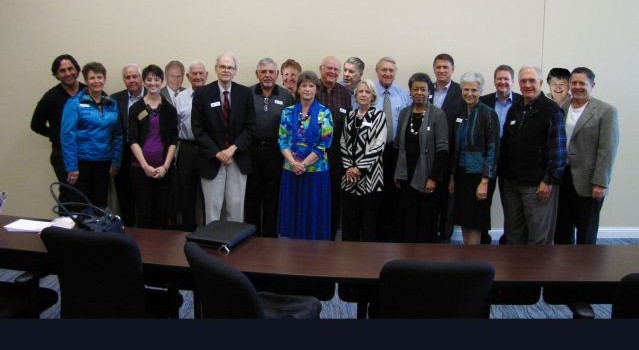
BWFLI team stretching and blessing the next generation of leaders at East Texas Baptist University

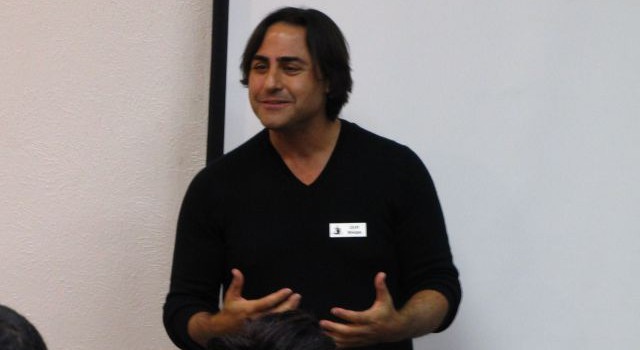
Cliff Shiepe, best-selling author, inspires students

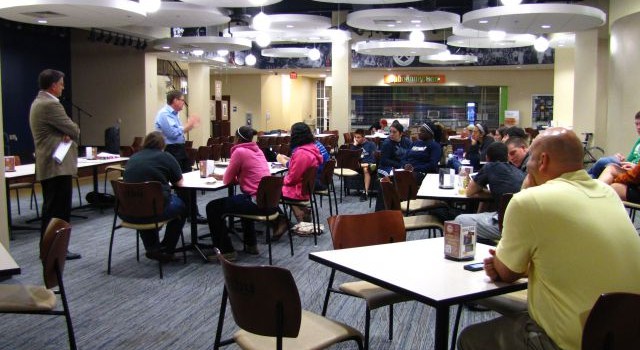
ETBU students gathered at midnight to discuss “What’s Next” and job market tips

Former All-American, All-Pro Bill Glass stirring the athletes

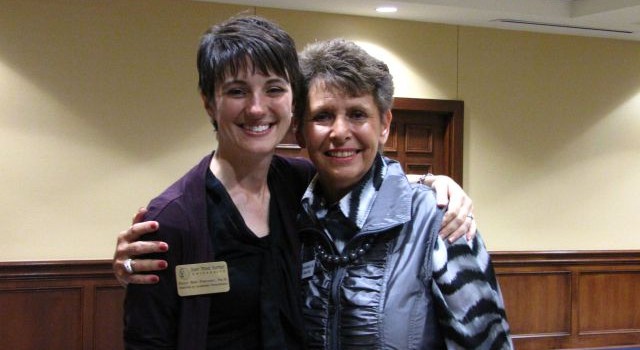
ETBU Steering Committee Chair Emily Prevost and BWFLI President Brenda A. Smith sharing a celebratory moment

  • 01 BWFLI-ETBU Team

    BWFLI team stretching and blessing the next generation of leaders at East Texas Baptist University

  • 02 Cliff Shiepe ETBU

    Cliff Shiepe, best-selling author, inspires students

  • 03 Midnight session ETBU

    ETBU students gathered at midnight to discuss “What’s Next” and job market tips

  • 04 Bill Glass ETBU

    Former All-American, All-Pro Bill Glass stirring the athletes

  • 05 Emily Prevost-Brenda Smith ETBU

    ETBU Steering Committee Chair Emily Prevost and BWFLI President Brenda A. Smith sharing a celebratory moment

Balanced Spirituality

Brenda’s Blog – March 10, 2026

“The boy didn’t make it snow – God did!” My three year old grandson Will had it right. The story told of a little boy who badly wanted snow. His Grandfather told him to try all sorts of silly things to bring down the white, fluffy stuff. Nothing worked. Finally, he did a snow dance and sure enough, the rain turned into flakes and covered the ground. “I did it! I made it snow!”

Without even a word, my grandson looked me in the eye and reminded me of the true truth.

His candor reminded me of a cold, snowy Christmastime in Dallas when I parked the car in a crowded mall lot, went in with my grandson Andrew to enjoy time together. When we left it was dark, and I couldn’t remember where I parked. We walked and walked and walked. Finally, Andrew spotted the car! “Thank you, Jesus” was my response. “How come you thanked Jesus? I found the car!”

There is a balance, isn’t there? Taking credit for weather conditions is foolish. Failing to acknowledge the diligence of a 9 year old is negligent.

I truly believe God is evident in all things. I believe He allowed Andrew the joy of finding the car. And, I also believe He gave Will the insight to understand who is the true maker of weather.

Showing Andrew the power of prayer and the joy of being the beneficiary of God’s providential grace was the “teachable moment” that cold December night. Celebrating with Will in his belief in our sovereign God allowed us a time to share the goodness and awesomeness of this same God.

As the Mom of three young ones I didn’t have the patience or strength to look for these spiritual vignettes. Aging brings the blessing of perspective. I thank the Lord for these “wee bites” which strengthen my heart and stretch them.

Read More

Mentor Search

Weekly Thought – March 10, 2026

Fred’s book, You and Your Network, influenced generations of leaders. Editors often chided Fred for his “packed to the gills” writing style, urging him to dilute the material. He was told his books could easily be stretched into two. He preferred stretching people, and not content. This was appreciated by his readers.

A comment from California reflects this: “The main thing that really keeps our attention with You and Your Network is that it cuts out all of the fat, boilerplate, and extra information most authors are so compelled to put into their books just for the weight of it.”

Mentor Search

Over the years I identified seven qualities I look for in a mentor:
1) Do they have wisdom from experience? Scripture says young men are for strength and old men are for wisdom. A mentor must understand the principles of life which I believe, comes from scripture.
2) Do they feel noncompetitive toward younger people? You need a mentor who can relax and say, “This person is a race horse and I am now just the trainer. He’s going to go to the winner’s circle and get the money. I will be happy just making a contribution to that.” Mentoring brings vicarious accomplishment.
3) Can they spot talent? In my first meeting with someone I look for that “unscratchable itch.” Good mentors can assess your current skills and take a good guess at your potential. A good mentor wants to contribute to accomplishment.
4) Is there chemistry between us? One way I check chemistry is to stop and say, “Please repeat to me what I just said.” Sometimes you heard the darndest things. If a person isn’t listening well, there probably won’t be a profitable chemistry.
5) Will they take the responsibility seriously? Does it have meaning to them? Does the relationship count? Can they feel hope? Are they willing to invest the time?
6) Are they willing and able to confront? Confrontation is surgical. If you’re afraid of blood, you should not be in the operating room. And if you primarily want people to like you, you’re not good at confrontation. But a good mentor pauses before confrontation to ask, “Am I saying this in love willing the ultimate good for the other?”
7) Do they ask good questions? My mentor, Maxey Jarman, told me, “Management is supposed to have the answers, but the board is supposed to have the questions.” Likewise, a good mentor should be able to ask good questions. The job of a mentor is to open a window – the right window. And then, point to the best path.

Think about these things: 1) Who is mentoring me? 2) Who am I mentoring? 3) What message do I have to communicate?

Words of Wisdom: “Mentoring brings vicarious accomplishment.”

Wisdom from the Word: “Is not wisdom found among the aged? Does not long life bring understanding?” (Job 12:12 NET Bible)

Read More

Commanding Communication

Weekly Thought – March 3, 2026

Fred studied communication throughout his life. He sat down in the 1980s and wrote our ten material elements of good speaking. Often, speakers and speakers-to-be visited with Fred for clarity on the process.

Thanks for including BWF in your prayer life. We seek to continue Fred’s work of stretching others while blessing them to the glory of God.

Commanding Communication

These didn’t come from Sinai, but from years of trial and error. Somebody asked me to outline the speaking process and this is my shot at it:
1) Be believable – The first step to being believable is to believe in your message. Then, your style, dress, speech patterns, vocabulary must be in agreement. Speaking with authority without talking down to the audience allows them to relax and believe in you.
2) Be audience oriented- have the attitude of the servant, never the master. There should always be gratitude for the opportunity to be there. And, importantly, speak to the audience about a subject, never about a subject to the audience.
3) Be personal – There should be a one-on-one relationship between the speaker and the audience. Good communication occurs when the speaker is not removed, or even worse, accusatory.
4) Be prepared – Speak out of the overflow of preparation. Have enough material that appropriate shifts can be made when needed. Be a well-spring of freshness, not a dry hole. Keep on reading, learning, studying before speaking.
5) Be enjoyable – Always give illustrations that allow the audience to take away the key points. Audiences respond to stories – but keep them to the point. Rabbit trails confuse the audience. Giving hope is your job as a communicator. Share good news.
6) Be human – You are not the Messiah, you are not inerrant, you have a message from one human to other humans. Use humor appropriately to move the message. Never use blue humor – it demeans the speaker and the audience.
7) Be empowered – Speak with a pure motive and a clean heart. You are the pipe, not the pump. Let the message flow through you.
8) Communicate to change behavior – Move the audience to take action, but never “work them.” Inscribe on your brain: my job is to motivate, not manipulate.
9) Pray before you speak – I prefer praying before to having the audience praying as I speak, “Help him, Lord; Help him!”
10) Leave them wanting more from you and about the subject. And never violate the time you’ve been given. If the program shortens your time, shorten your speech.

Bottom line: Speak to express, not impress. Communicate to bless.

This week think about: 1) How can I apply these points to my speaking? 2) Which one is most helpful right now? 3) What message do I have to communicate?

Words of Wisdom: “Speak to express, not impress.”

Wisdom from the Word: “For you were made rich in every way in him, in all your speech and in every kind of knowledge.” (1 Corinthians 1:5 NET Bible)

Read More

Uniquely You

Brenda’s Blog – February 24, 2026

World famous glass bathrooms” read the billboard luring travelers to stop in Sulphur Springs, TX. Personally, it raised more questions than interest. But it made me think about distinctives.

Companies work hard to distinguish themselves. Some do it by product design, others by advertising campaigns, and still others by pricing strategies. Businesses want positive name recognition.

A friend once worked for a CEO whose genius was creating bizarre morale builders. His head first dive into a pool of Jello fired up the sales force. Another thrilled the employees each day bounding into the international headquarters two steps at a time dressed in running shorts. Definitely distinctive – they chose to be recognized for their independent quirkiness.

While working as a recruiter for a large insurance company we used a personality test consisting simply of fifty descriptive words on two sides of one page. The only difference: one side said, “Check the words you would use to describe yourself.” The other side said, “Check the words others would use to describe you.” Surprising how many saw themselves one way and expected others to view them differently.

Peter Greer, speaker at a Catalyst meeting, talked about ways to enter into conversation without leading with “what do you do?” In his list of alternative opening questions, he included, “What one word would others use to describe you?”

What one word would you use to describe yourself? What is your distinctive? What differentiates you from the other hundreds of millions sharing this planet?

I want my word to reflect my purpose and mission. I want my word to identify my heart’s desires. I want my word to express my longing for a life that counts. My word? Connect. What’s yours?

Read More

Self-Improvement: A Way of Life

Weekly Thought – February 24, 2026

Fred believed in self-analysis, but not navel-gazing. He created templates for measurement. “I miss Fred,” wrote a BWF follower. “I often think, ‘what would Fred think about this?’” Interestingly, most people say, “How would Fred think, not what would Fred do?”

Self-Improvement: A Way of Life

When considering the possibilities of success, I measure myself in several categories:

1) Likes. What would I do if I didn’t need a paycheck?

2) Dislikes. What ideas, methods, people, and things do I dislike?

3) Reaction of others. Are people receptive to you and your goals? When you join a new group, how do the others react to your ideas?

4) Personality traits. It is critical to understand how you are wired. Are you quiet or talkative, big picture or detailed, interested in individuals or the big group, quick to make decisions or more contemplative? Find your constructive strengths and your destructive weaknesses – focus on one and bolster the other;

5) Mental capabilities. If you want to be a big frog in a big pond, you better be able to croak as loudly as the other frogs. Mental energy provides the fuel. Is your mind constantly active? Are you a constant learner? Have you continued studying since formal education ended?

6) Physical abilities. Some goals have a high physical price tag. How prepared are you to undertake such a task? Few people can go farther than their health will permit. A goal that costs physical or emotional health is foolish.

7) Patience. Sound progress is most always slow; therefore, patience is required. Gladstone said the key requirement of a great prime minister is patience – the second is patience, and the third is patience. How able are you to postpone gratification for the accomplishment of a greater goal?

8) Determination. In my opinion, this is the element which sets those who achieve goals and those who don’t. How many jobs have you started and left unfinished? The determined know there is always a way around obstacles.

9) Vision. This doesn’t mean just having a dream. Seeing others achieve seemingly impossible goals gives a pattern for personal accomplishment. Vision invigorates the work ethic; daydreaming just energizes the wish ethic. Vision means seeing and doing.

10) Character. the foundation of all success which consists of integrity, self-control, perseverance, and truth. And, I believe a proper spiritual outlook is the cement which holds a true, happy, and successful life together.

This week think about: 1) When did I last evaluate my goals using Fred’s 10 categories? 2) What does my life say to my family and my associates about character? 3) How real are my expectations?

Words of Wisdom: “Vision invigorates the work ethic: daydreaming energizes the wish ethic.”

Wisdom from the Word: “May he grant your heart’s desire; may he bring all your plans to pass! “ (Psalm 20:4 NET Bible)

Read More

Straight Talk On Money

Weekly Thought – February 17, 2026

Fred “held court” on Saturdays during his last years. Chairs set up around his hospital bed held young and old who came for their weekly shot of Fredisms. But his influence continues through his writings and the lives he touched who now touch others. A bright, energetic businesswoman remarked last week, “I wish I had made the effort to spend time with Fred, but I am now learning through the website and the weekly thoughts.” Good to see the ripples still spilling out across the water.

Straight Talk On Money

Someday I am going to write a book about money. Eventually most people who come to sit and talk ask me about it. I put down some bullet points about common sense money management. We will flesh them out at another time, but I hope these can be helpful.

1. Money is compatible with happiness if we recognize: a) money is a great servant, but a lousy master; money is means, and never an end; b) golden chains can enslave our families, our employees, and even our friends; money-motivated manipulation is wrong; c) money can be a terrible tyrant – we need to see when too much is too much; d) what we own is not who we are – money should never define us.
2. There is a four way test for money management: a) Do I understand the proper use? b) Can it be gratefully enjoyed? c) Will it be enthusiastically shared? d) What is my capacity for generous giving?
3. Common sense rules for solvency: a) tell yourself the truth; b) live within your income; c) escape the plastic plaque; d) outwit emergencies; e) pay no interest on depreciating assets; e) always put luxuries last
4. Observe these caution signs: a) high return = high risk; b) when you feel greed, STOP; c) if you are ignorant of the what, then know the who; d) stop a loss and continue a gain; e) beware of holy hunches, visions, and coincidences.
5. When loss occurs take the road to recovery: a) stay busy doing the right things; b) organize for plans dispel confusion; c) recognize you can live with the facts; d) never lose the good of a bad situation; e) be redemptive and transform, but don’t conform; f) God is there in the trouble…He is there to be found.

This week think about: 1) What role does money play in my thinking and planning? 2) How do I best use money? 3) When has money become a tyrant?

Words of Wisdom: “Money is a great servant and a lousy master.”

Wisdom from the Word: “The one who loves money will never be satisfied with money; he who loves wealth will never be satisfied with his income.This also is futile.” (Ecclesiastes 5:10 NET Bible)

Read More