BWFLI
  • Facebook
  • Home
  • Blogs
    • Brenda’s Blog
      • Brenda’s Blog
      • About Brenda A. Smith
    • Weekly Thoughts
    • Breakfast With Fred
      • What is Breakfast With Fred?
      • About Fred Smith, Sr.
      • Breakfast With Fred website
  • BWFLI Roundtable
    • BWFLI Launches the Roundtable
    • Introduction-Schedule-Bios
    • Ron Glosser-Fred Smith chapter
    • Perseverance Book
    • 200 Mentoring Questions
    • Jarvis College BWFLI poster
    • Alice Lloyd College poster
    • Lindsey Wilson College poster
  • Leadership Online
    • Leadership Team
  • About Us
    • What is BWFLI?
    • What is Breakfast With Fred?
    • About Fred Smith, Sr.
    • About Brenda A. Smith
    • Contact Us
  • Please Donate
    • Click Here to Donate
    • Why Give to BWF Project, Inc.?
01 BWFLI-ETBU Team 02 Cliff Shiepe ETBU 03 Midnight session ETBU 04 Bill Glass ETBU 05 Emily Prevost-Brenda Smith ETBU

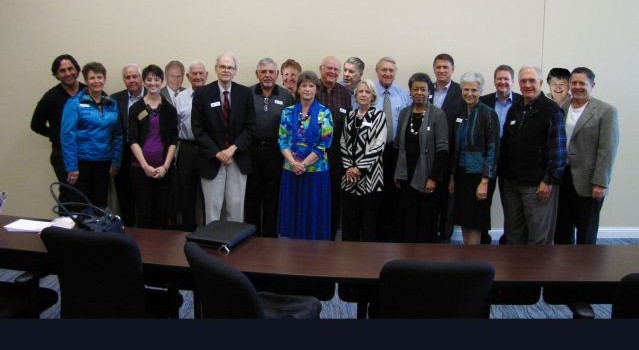
BWFLI team stretching and blessing the next generation of leaders at East Texas Baptist University

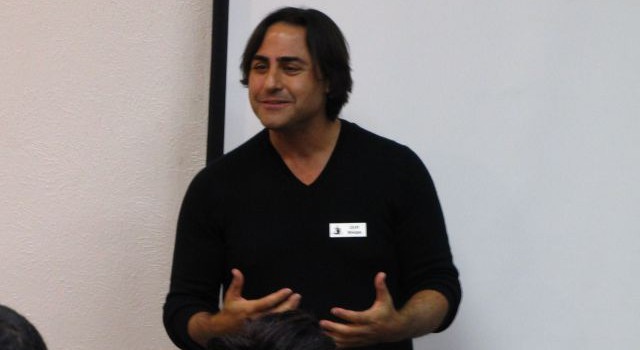
Cliff Shiepe, best-selling author, inspires students

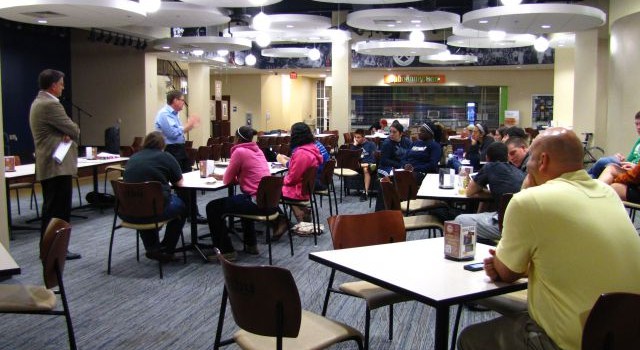
ETBU students gathered at midnight to discuss “What’s Next” and job market tips

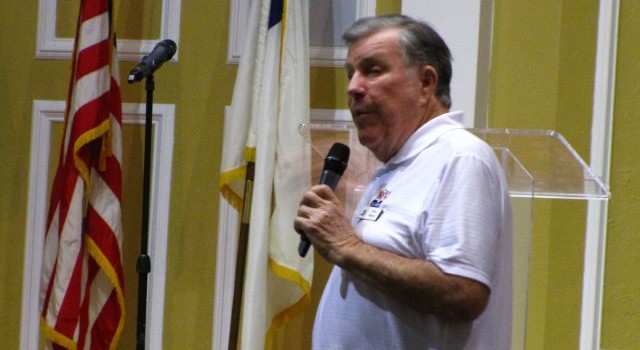
Former All-American, All-Pro Bill Glass stirring the athletes

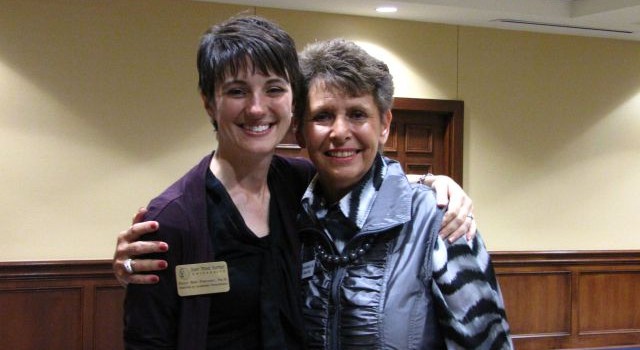
ETBU Steering Committee Chair Emily Prevost and BWFLI President Brenda A. Smith sharing a celebratory moment

  • 01 BWFLI-ETBU Team

    BWFLI team stretching and blessing the next generation of leaders at East Texas Baptist University

  • 02 Cliff Shiepe ETBU

    Cliff Shiepe, best-selling author, inspires students

  • 03 Midnight session ETBU

    ETBU students gathered at midnight to discuss “What’s Next” and job market tips

  • 04 Bill Glass ETBU

    Former All-American, All-Pro Bill Glass stirring the athletes

  • 05 Emily Prevost-Brenda Smith ETBU

    ETBU Steering Committee Chair Emily Prevost and BWFLI President Brenda A. Smith sharing a celebratory moment

Movers

Weekly Thought – September 15, 2026

Fred always said, “If you understand the premise from which a person operates everything they do is logical.” When others questioned behavior of people, he would simply work to find their base motivation. For Fred, discernment was art and science.

Movers

Our priorities are directly related to our feelings. What makes us feel good drives our actions. Responsibility and conscientious action are often considered drivers, but they are the effective because they create a sense of well-being. Dr. Phil repeatedly asks his guests, “How’s that working for you?” He understands our behaviors are correlated with our emotional needs.

Feelings are not completely bound up with facts, but are bound up with our energies and with our actions. They are the bridge between the heart and the mind – the heart’s being the value structure and the mind’s being the judicial knowledge structure. Actions which do not give us emotional satisfaction are soon eliminated.

People who make bad choices look unreasonable and foolish. We question why they do what they do. We assume they are illogical. But, delving into their motivations, we find hurt and pain to be their drivers. They feel comfortable being uncomfortable.

Mother Teresa was well known for her selfless living. Many see service as her motivator. I think she received emotional satisfaction from worship and worship was derived from service. So, worship led her to unselfish service.

When I was young I could never imagine why people trained fleas until I saw the thrill on the face of a man who amazed patrons with his circus. He wasn’t motivated to make itchy bugs jump; he was motivated by applause.

Pride is a strong motivator. Political prisoners suffer dire consequences by starving for their cause… belief is seen to be the driver, but actually it is pride. What looks like maturity is often just a shift in the object of our pride. If we are proud of our physical attributes, the time comes when the muscles flab up and hairlines fall. Most people shift to career accomplishment, intellectual pursuits, or community involvement. But it is still pride.

Successful living starts with a clear understanding of our personal motivators.

This week think about: 1) What gives me emotional satisfaction? 2) How well do I know the motivators of those around me? 3) Who am I discounting as illogical because I don’t know what motivates them?

Words of Wisdom: “Our priorities are directly related to our feelings.”

Wisdom from the Word: “Let each one examine his own actions.” (Galatians 6:2 NIV)

Read More

Staying On Track

Weekly Thought – September 8, 2026

Fred knew the Bible spoke more about money than almost any other subject. He filled hundreds of files with one-liners, speech memos, letters, and passing thoughts regarding financial wisdom. He was interested in the philosophy of money. He created filters through which he passed experiences, opportunities, and people. Fred’s other area of intense thought was discipline. These disciplines served him well as he employed them to finish well.

Staying On Track

A few early disciplines served me well. I adopted these when I was making $208 a month in 1941.

1) Define a lifestyle then find a way to finance it. Earning as much money as I could never seemed to be the right focus for my life. Some advise, “Make all you can and then develop a lifestyle to consume the money.” That is materialism. It is also frustrating and most who espouse this philosophy find it lacking in meaning. We outlined a general lifestyle spread over a number of years that would be useful, pleasant, and full. Then we established the specifics from which we created our budget. As our earning capacity increased, we continued defining the lifestyle first, adding in a few luxuries (but not enough to live luxuriously). We wanted to avoid the pressures of temptation. By setting our own standard we avoided social competition.

2) Maintain adequate savings. Early in our married life we determined to save enough to be liquid for a year without working. Without savings a person can become a financial slave. It cost us in our early years because we had to forego a car, live in a one room flat, and do without many things others considered necessities. Adequate savings gives more than just a feeling of security. It provides a foundation for moral decisions you may be called upon to make. I once took a moral stand in a board room which was made much easier because I knew they didn’t have me hamstrung by my need for the next paycheck. In my earlier, more irreverent days I called my savings account FFGTHF (Fat Fred’s Go to Hell Fund). I was assuring myself I could always look a bad situation in the eye and say, “go take a running leap.”

3) Understand financial security. Security is a feeling, not a fact. No amount of money can actually give us security and yet we need to find a place of financial peace. Mary Alice and I decided what we would need for our ultimate needs, medical care, lifestyle maintenance, etc. and created a plan to get there. At first it was only about savings, but then as we reached the specific amount, it shifted to investment, putting “deposits in the memory bank,” charitable giving, and personal development. It was important to learn to feel as secure in our spending as it was in our savings. As a card-carrying member of the “waste not, want not” fan club, this was hard for me. I loved to say to our children: “A fool and his (her) money is soon parted.” But financial security was the attitude of providing for outflow, as well as inflow.

This week think about: 1) What does money mean to me right now? 2) What is my FFGTHF number? 3) How do I define financial security?

Words of Wisdom: “It was as important to feel secure in our spending as it was in our saving.”

Wisdom from the Word: “On the first day of the week, each of you should set aside some income and save it to the extent that God has blessed you so that a collection will not have to be made when I come.” (1 Corinthians 16:2 NET Bible)

Read More

Signs of the Time

Brenda’s Blog – September 8, 2026

“No Parking,” read the sign. Nothing unusual about that – ordinarily. But the Spring rains left the prohibition standing stork-like in the high waters of the St. Croix River in Stillwell, MN.

I immediately thought of something Dad used to tell me, “Brenda, stay current. Operate on what is, not what was, or even what you wish it were.” That sign was meant for times when the water stayed within its banks and motorists attempted to park their cars on the walkway.

Leaders keep their antennae well-tuned to conditions making decisions which reflect change while holding true to the vision. Consistent review of policies, products, and procedures keep organizations from wading into the water. Obsolescence quickly comes from missed opportunities.

Strong organizations build on the legacy of history while creating foundations for the future.

Relationships need review, as well. What are our goals? What is our direction? How are we growing? What needs tuning? What needs celebrating?

Recently I cleaned out two closets. A true challenge to staying current! Where is the fine line between holding on until it comes back into fashion and simply cluttering? What separates “good stewardship” from “hanging on to junk?” Staying current means making tough calls and filling bags.

The river waters will recede and the sign will serve its intended purpose. But on this sunny May day it served me well, triggering reflection. No lazy unexamined living for me… time to stay current.

Read More

The Power of Possessions

Weekly Thought – September 1, 2026

Fred and Mary Alice sat in their chairs, side by side, watching the devastation of 9/11/01. Fred loved New York City. During his consulting years with GENESCO and Mobil, he spent happy hours with Maxey Jarman or Harry Peckheiser exploring the wonders of the city he dreamed about as a young boy.

The destruction gave him opportunities to think about the nature of man. He also looked at questions he asked a group when talking about “things” as part of a Christian’s life. As we remember one of our country’s greatest losses, it is appropriate to share these “points to ponder.”

The Power of Possessions

My friend and mentor Maxey Jarman wrote a long memo to me responding to a question I posed about the loss of “things.” His summarized it: “A time of reversal and loss is a good time for a person to take stock of himself to see what he really wants out of life, whether he wants things that have eternal value, real value, or whether he particularly wants to have the kind of things that the world puts great value on.” He experienced great financial reversal, yet saw the blessing. Things were temporal; he built on the eternal.

In preparation for a men’s retreat on excellence, I thought about the power of possessions and asked myself and the group the following questions:
1) Am I obsessive about things, being either materialistic or antimaterialistic?
2) Do I use things as an escape from boredom?
3) Do I substitute things for accomplishment?
4) Am I able to “sit loose to things,” as Chambers says?
5) Is my view temporal or eternal?
6) What do things symbolize for me?
7) Am I accumulating things that appreciate or depreciate?
8) Does my anticipation of acquisition match my enjoyment?
9) How often do I use things to impress others?
10) How do I define the Christian view of possessions?
11) What traditions am I building as a legacy?
12) Do I acquire by plan or by impulse?
13) How do I define my lifestyle?
14) How high a price will I pay to be accepted?
15) Would I sacrifice excellence for wealth?
16) How would I respond if I lost everything?

This week carefully consider: 1) Which question made me stop? 2) What is my relationship to things? 3) Where is my security?

Words of Wisdom: “Things were temporal; he built on the eternal.”

Wisdom from the Word: “Do not accumulate for yourselves treasures on earth, where moth and rust destroy and where thieves break in and steal.” (Matthew 6:19 NET Bible)

Read More

Praying Leaders

Weekly Thought – August 25, 2026

Fred was born on September 1, 1915. This year would be the 111th anniversary of his birth. He was the third of five boys. His Mother and Dad taught him the value of integrity. Matthew Bunyan Smith and Amye Anderson Smith were praying parents. Fred followed their example and until physically unable, he knelt by his bed nightly asking for wisdom and “talking things over” with God.

Praying Leaders

Prayer alone will not produce a leader. The Apostle Paul was a leader before meeting Christ, but he was leading in the wrong direction. But no one can become a competent Christian leader without prayer. As healthy plants require rain, so powerful leadership requires prayer.

There is disuse, misuse, and abuse of prayer. I want to talk about four steps of useful prayer:
1) Positioning – Prayer positions me. It reminds me I am not the ultimate leader; He is. I am ever a steward and never an owner. Sometimes kneeling helps me to physically experience this step.
2) Shifting into neutral – Prayer is most effective when I shift into neutral gear. This means I come willing to accept divine leadership. This is the toughest part of my prayer life. Leaders are usually strong-willed and feel extremely uncomfortable, even awkward, if they aren’t in a forward gear. “Your will be done” is so much harder than “this is what I think we should do.”
3) Dynamic peace – Tournament golfers standing over a crucial putt, block out the crowd, the money, and focus on nothing other than the pure stroke. Often, as leaders we must block out our fear of failure. We must avoid second guessing our decisions. Prayer helps us to find a dynamic peace – not a sleepy slumber, but an exhilaration. Confidence comes and concentration follows. Prayer does not improve our basic skills, but it gives us concentration that permits us to do our best.
4) Acceptance – When I’ve done my best, only then in prayer can I peacefully accept failure and success, “treating those two impostors just the same,” as Kipling said. A leader prays himself into the conscious presence and will of God so that he accomplishes “my utmost for His highest” and hears the welcoming benediction, “Well done, good and faithful servant.”

This week think about: 1) What causes me to pray? 2) Who is my model as a praying leader? 3) How can I deepen my walk with Jesus?

Words of Wisdom: “Prayer alone will not make a leader.”

Wisdom from the Word: “Now Jesus was praying in a certain place. When he stopped, one of his disciples said to him, “Lord teach us to pray.” (Luke 11:1 NET Bible)

Read More

Destruction to Reconstruction

Brenda’s Blog – August 25, 2026

“The artist has determined the presence of the Tower has destroyed his work, so it is closed.”

One of the most interesting exhibits at the Nasher Sculpture Garden in Dallas is a building which features a large hole in the ceiling. Visitors, seated on concrete benches, stare through this hole at the sky. “Trending Blue” is the title.

A Dubai-like office tower now looms over the garden and obscures the purity of the artist’s vision. Rather than compromise, the artist closed access to his work. “It is destroyed.”

Gratitude flowed over me as I read those words. Not because the room was closed, but because we have a God who doesn’t post a sign on me saying, “She is destroyed.” There have been towers, strongholds, and fortresses which loom over my life, blocking the view of His face. There have been times when “Trending Black” seemed the appropriate title, BUT, our God reached down past the obstructions and reconstructed.

The second part of the notice says, “The artist is working to design something that will not be affected by the tower.”

Jesus is the way of escape from the terrible tower. Our God created a way for a clear view of His face.

What if my bad decisions had no means of remediation? What if my choices were written indelibly with no possibility of correction? Praise God He doesn’t mark us “damaged goods” and put us on the trash pile.

How do we apply this to leadership? We are called to lead imperfect, flawed, and sometimes aggravating humans. When plans aren’t executed perfectly, is it tempting to take out the “work destroyed” sticker? What strategies are built in for alternative operations? When do you go into reconstruction phase?

Leading with hope is the sign of greatness. Leading with realism is the sign of effectiveness. Towers may loom over us personally or professionally, but there is always a way to adjust and see the sky.

Read More